

African Wildlife Art for the Modern Collector: Photography's Place in the Tradition
African wildlife has been the subject of serious art for over a century. Long before cameras were light enough to carry into the bush, painters and sculptors made the case that the animals of Africa belonged not only in the natural world but in the world of art — in galleries, in collections, in the homes of people who would never see a lion or an elephant in person but wanted to understand what it meant that such creatures existed.
That tradition is alive today. But the dominant medium has changed. Where African wildlife art once meant oil paintings and bronze sculptures, it now increasingly means photography — specifically, fine art photography made with artistic intention, printed on archival materials, and sold in limited editions to collectors who treat the work as art, not decoration.
This shift has happened gradually, and not without resistance. Photography's fight for gallery legitimacy has been long and sometimes bitter. But in the specific category of African wildlife art, photography has not only arrived — it has become the primary medium through which most collectors encounter the subject. Understanding how it got here, and who shaped the path, matters for anyone who wants to collect wisely.
The painters who started it
Before photography, African wildlife art was the domain of painters and illustrators who travelled with expeditions, hunting parties, and early conservation missions. Artists like Wilhelm Kuhnert painted East African wildlife in the late 1800s and early 1900s with a precision and emotional depth that went beyond scientific illustration. His paintings of lions, elephants, and East African landscapes established the visual language that would define the genre for decades — warm light, dramatic compositions, animals presented as noble and powerful.
The tradition continued through David Shepherd, whose paintings of elephants and other African species became some of the most commercially successful wildlife art of the twentieth century. Shepherd was also a pioneering conservationist who used his art to fund anti-poaching efforts — a model that would later be adopted by photographers. The David Shepherd Wildlife Foundation continues to fund conservation work across Africa and Asia through art sales and auctions.
What these painters shared was a belief that African wildlife was worthy of the same artistic attention given to European landscapes and classical subjects. They elevated the animals from exotic curiosities to serious artistic subjects. That elevation is the foundation on which everything that followed was built.
Peter Beard and the rupture
Peter Beard broke the tradition wide open.
Working in Kenya from the 1960s onward, Beard made photographs, collages, diaries, and mixed-media works that refused to separate the beauty of African wildlife from the violence being done to it. His photographs of dying elephants during the Tsavo culls, his collaged diaries splattered with blood and ink and pressed flowers, his obsessive documentation of a paradise in the process of being destroyed — all of it was a deliberate rejection of the noble, painterly tradition that preceded him.
Beard was not making African wildlife art in the traditional sense. He was making art about the end of African wildlife — about the collision between conservation ideals and the reality of overpopulation, habitat loss, and political failure. His work was romantic, chaotic, self-destructive, and impossible to ignore. It introduced a tone of urgency and personal anguish that had not existed in the genre before.
For collectors, Beard's legacy matters because he proved that African wildlife art could be intellectually serious. It could engage with ideas, not just aesthetics. It could be difficult, uncomfortable, and conceptually ambitious. He moved the genre from the living room wall to the gallery wall — and in doing so, opened the door for everything that followed.
Nick Brandt: the elegiac monument
If Beard opened the door, Nick Brandt walked through it and built a cathedral.
Brandt's photographs of East African wildlife — made with medium format film, printed at monumental scale, presented without captions or species identification — are among the most important works of wildlife art produced in any medium. His early trilogy (On This Earth, A Shadow Falls, Across the Ravaged Land) established a visual language of intimacy and grandeur that no wildlife photographer before him had achieved. The animals are not specimens. They are presences — dignified, monumental, and implicitly doomed.
Brandt's later work pushed further into the political and environmental. Inherit the Dust placed life-sized photographs of animals on panels erected in landscapes where those animals no longer exist — a construction site, a quarry, a rubbish dump. The Day May Break placed survivors of climate disasters alongside endangered animals in a shared frame. The tone is consistent throughout his career: elegy. The world is losing something irreplaceable, and the art exists to bear witness.
For the African wildlife art market, Brandt's impact is difficult to overstate. He proved that wildlife photography could command gallery prices, institutional attention, and critical respect. His prints sell for five and six figures at auction. Museums collect his work. The art world takes him seriously in a way that it takes very few photographers seriously. He made the case — through decades of consistent, intellectually rigorous work — that photographing wildlife is a fine art practice, not a subset of nature photography.
David Yarrow: spectacle and scale
David Yarrow operates in a different register entirely. Where Brandt is quiet, Yarrow is loud. Where Brandt mourns, Yarrow celebrates. Where Brandt uses medium format film and natural light, Yarrow uses triggered camera traps, dramatic perspectives, and high-contrast processing to create images that are immediately arresting.
Yarrow is the most commercially successful wildlife photographer alive. His prints sell for hundreds of thousands of dollars. His collector base includes celebrities and business leaders. He has raised over $20 million for conservation through art sales and charity auctions. His approach is unambiguously populist — the images are designed to grab attention, to stop you in a gallery, to dominate a wall in a way that demands conversation.
The criticism of Yarrow — and it exists in the fine art world — is that the spectacle sometimes overwhelms the subject. The production values can feel closer to advertising than to art. But dismissing his impact would be a mistake. Yarrow has proven that wildlife photography can compete commercially with any art form, and his charitable fundraising through print sales has created a direct, measurable link between art collecting and conservation.
The generation working now
Below the established names, a generation of photographers is building on what Beard, Brandt, and Yarrow established — but in their own voices, with their own concerns, and often with a different relationship to the traditions of the genre.
Photographers like Joachim Schmeisser, Beverly Joubert, Will Burrard-Lucas, and Greg du Toit are producing work that takes the genre in various directions — from Schmeisser's intimate, golden-toned portraits of endangered species to Burrard-Lucas's remote camera trap innovations to du Toit's underwater and eye-level perspectives that redefine how we see familiar animals.
What connects these artists, despite their different approaches, is the same thing that connected the painters before them: the belief that African wildlife is worthy of serious artistic attention, and that the resulting work belongs in collections, in galleries, and in the cultural conversation about what we value and what we protect.
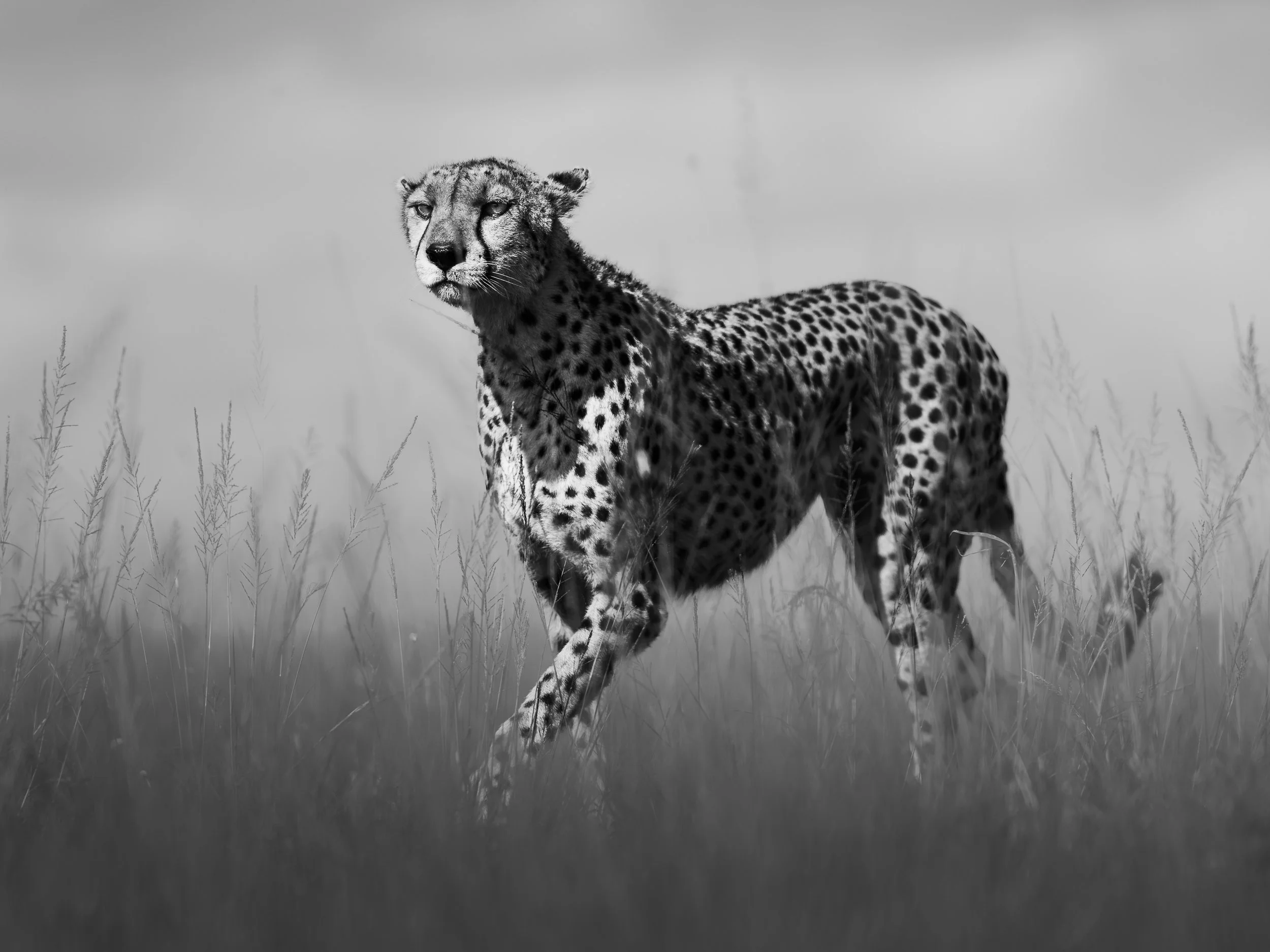
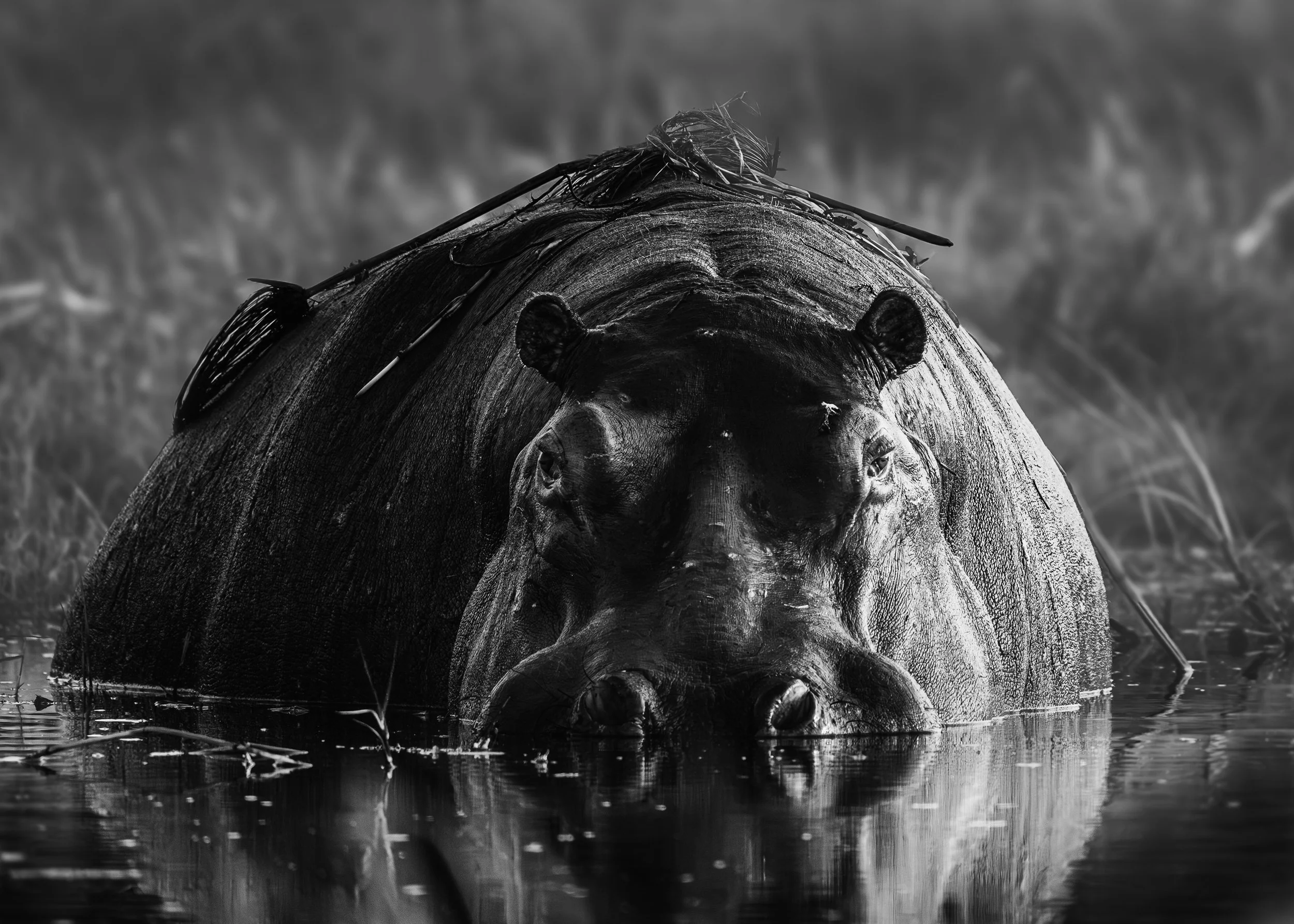
This is the tradition I work within. My own contribution — black and white work that emphasises presence over spectacle, that frames wildness as proof rather than elegy — is a deliberate position within this lineage. Where Brandt mourns what is being lost, I choose to show what remains. Where Yarrow creates spectacle, I look for stillness. These are not criticisms of their work. They are descriptions of where I stand relative to it.
The tradition is large enough for all of these voices. And for collectors, understanding the lineage — knowing where a photographer's work sits within the broader conversation — is part of what separates informed collecting from impulse buying.
What this means for collectors
If you are drawn to African wildlife art, you are entering a market with genuine depth, real history, and growing institutional recognition. Photography has become the dominant medium in this space, and the best work being produced today holds its own against any art form.
Here is what to look for:
Artistic vision, not just technical skill. The question is not whether the photograph is sharp or well-exposed. The question is whether the photographer has something to say — a coherent vision that runs through the body of work and distinguishes it from the thousands of competent wildlife photographs produced every year.
Series coherence. The photographers who matter in this tradition work in coherent collections — bodies of work organised around places, themes, or ideas. A portfolio of random beautiful images is not a body of work. A series built on a sustained engagement with a subject is.
Edition discipline.Limited editions are the standard for collectible work. Small editions — typically 25 or fewer — signal that the artist values rarity and commits to the long-term integrity of the work. Open editions or constantly reissued images are the domain of the decorative market, not the fine art market.
Archival quality. Museum-grade printing on archival paper with pigment inks is not a luxury option. It is the baseline expectation for serious work. A photographer who cannot specify their printing materials and process is not producing collectible art.
Position within the tradition. Every serious wildlife photographer is in dialogue with the artists who came before. Understanding where a photographer's work fits — whether it extends, challenges, or redirects the tradition — helps you evaluate its significance and its potential to hold value over time.
African wildlife art is not a niche. It is a tradition with a century of history, a roster of internationally recognised artists, and a market that is growing as photography gains institutional legitimacy. The collectors who understand the tradition are the ones best positioned to build collections that matter — aesthetically, culturally, and financially.
Explore the collections:View all limited edition fine art photography collections →
Interested in a print?Submit a print enquiry →