

Why Monochrome Reveals What Color Conceals: The Case for Black and White Wildlife Photography
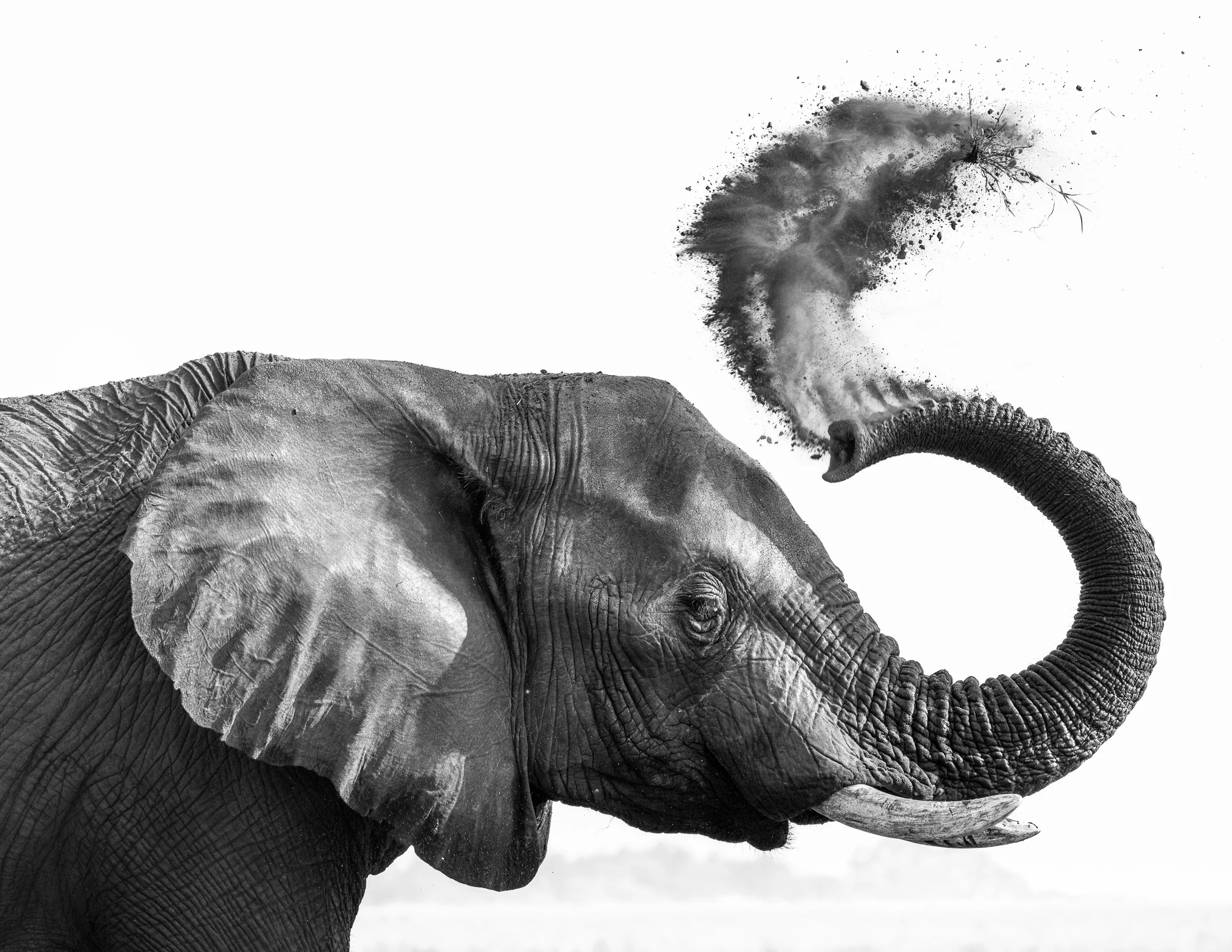
Black and white photography has always felt honest to me. Especially when it comes to wildlife.
Colour can be beautiful, but it can also do a lot of the work for you. A warm sunset makes almost any photograph feel emotional. A bright blue sky makes almost any scene feel alive. Colour gives the viewer shortcuts — ways to feel something without looking closely.
In black and white, there is nowhere to hide. The image has to stand on light, shape, contrast, and expression alone. When those elements work, the photograph feels complete. When they do not, it falls apart quickly.
That is why I keep returning to monochrome when I photograph animals in the wild.
What changes when colour is removed
Without colour, the viewer notices different things. The texture of skin. The direction of light. The space around the animal. The weight of a body standing still.
In black and white wildlife photography, the subject becomes clearer. There is less information competing for attention. The image feels more focused, and often more direct. You are not guided by a blue sky or warm tones. You are guided by the animal itself.
This shift creates a different kind of connection — one that feels calmer and more intentional.
A tradition that runs deep
I did not arrive at monochrome on my own. There is a lineage, and it matters.
Nick Brandt changed what black and white wildlife photography could be. Before him, wildlife photography was largely about action, colour, and spectacle. His portraits of elephants and lions in East Africa — still, close, almost impossibly intimate — proved that wildlife could be photographed with the same gravity as a human portrait. He shot on medium format film, without telephoto lenses, standing close enough to the animals that the images feel like encounters rather than observations. His work is devastating and beautiful. It set a standard.
Sebastião Salgado took a different path. His black and white work across Genesis treated the natural world as something vast and ancient — landscapes and creatures photographed as if from the perspective of geological time. His images do not ask you to feel for a single animal. They ask you to comprehend the scale of what still exists. That is a different kind of power.
And before both of them, Ansel Adams established the idea that a photograph of the natural world could carry the same artistic weight as a painting. His zone system — a method for controlling tonal range in black and white — gave photographers a technical language for translating what the eye sees into what a print can hold. Adams was not photographing wildlife, but his principle remains: the print is the performance. The negative is only the score.
These photographers shaped how I think about monochrome. Not because I am trying to imitate them — our subjects, methods, and intentions are different. But because they proved that removing colour from a natural scene does not reduce it. It concentrates it.
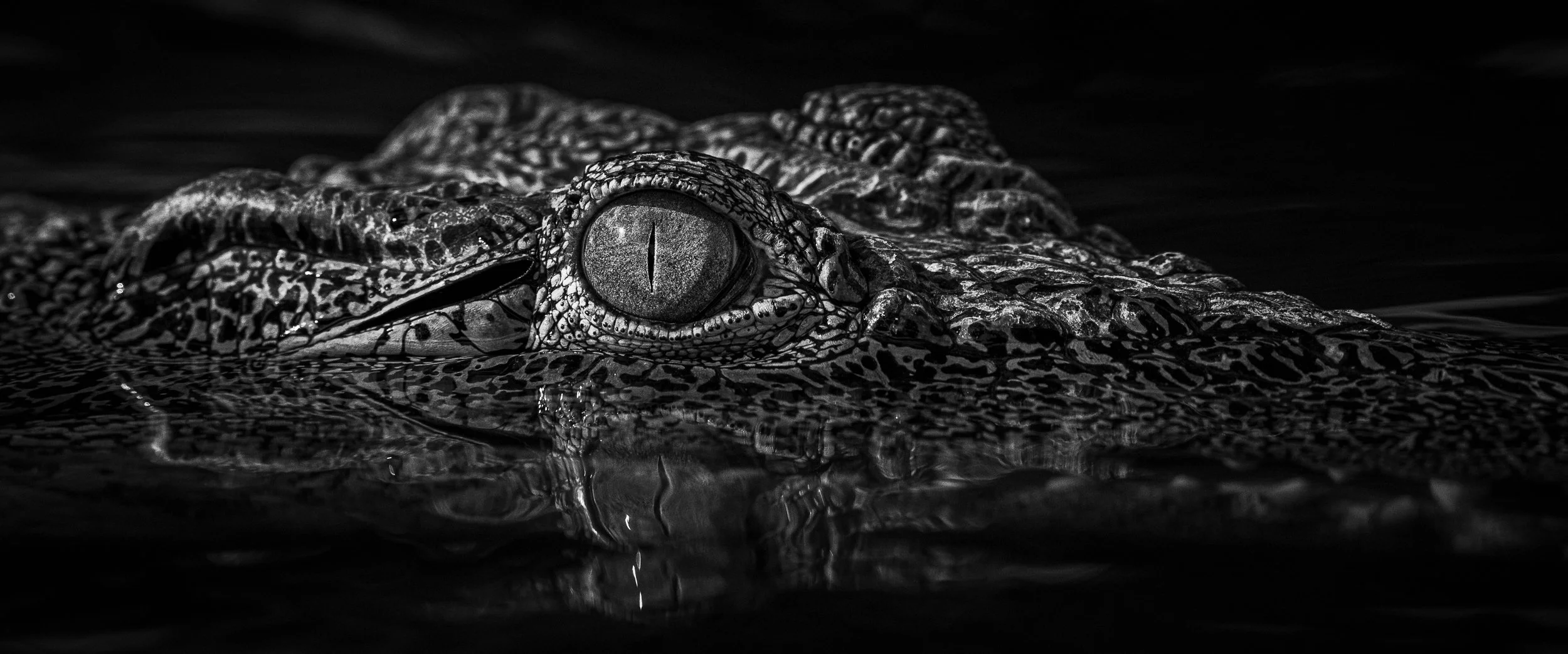
Why wildlife works so well in black and white
Wild animals are strong visual subjects by nature. Their forms are clear. Their movements are purposeful. Their expressions carry meaning even in stillness.
Black and white emphasises these qualities. It separates the animal from the environment just enough to let its presence come forward. The photograph becomes less about scenery and more about the encounter.
For me, that is important. Wildlife photography is not about decoration. It is about acknowledging something real that exists beyond us.
Contrast and emotion
In monochrome photography, contrast becomes the main tool for emotion. Bright highlights can feel open or intense. Deep shadows can feel quiet, heavy, or intimate.
These emotional cues are subtle, but they matter. In wildlife photography, contrast often reflects the reality of the moment — early morning light, harsh midday sun, or fading visibility at dusk. Black and white keeps that honesty intact.
Nothing is added. Nothing is softened.
A lion emerging from shadow. An elephant's skin catching the last of the afternoon light. Birds dissolving into mist. These are moments where contrast does the work that colour would only complicate.
Slowing the viewer down
Colour is immediate. Black and white asks for more time.
When people look at monochrome wildlife images, they tend to pause longer. The image does not explain itself instantly. It invites attention rather than demanding it.
This matters, especially today. Wildlife photography is everywhere — on Instagram, on television, on websites selling prints by the thousand. What is rare is an image that holds someone's focus without trying too hard.
Black and white creates that space. It asks the viewer to stay, to look again, to notice what they missed the first time.
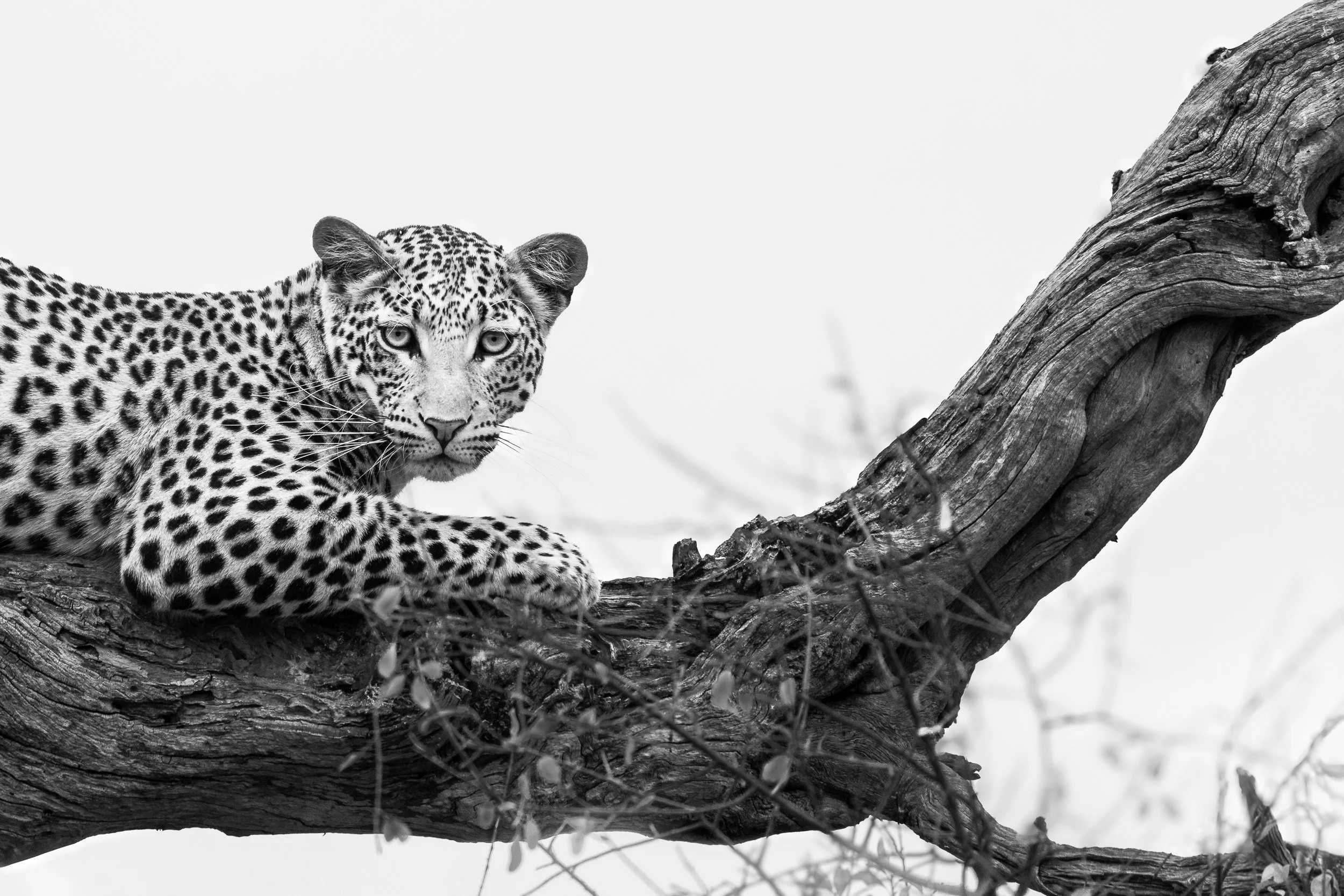
Stillness has weight
One thing black and white does especially well is highlight stillness.
A resting animal. A pause between movements. A quiet moment that might otherwise be overlooked.
In colour, these moments can feel empty — like the photographer missed the action. In black and white, they feel deliberate. The absence of movement becomes part of the image, not a lack of action.
This is often where the strongest wildlife photographs live. Not in the dramatic charge or the kill, but in the stillness that surrounds it. The moment before. The moment after. The animal simply being present.
A practical choice, not a trend
Black and white is not a stylistic decision I make to stand out. It is a practical one.
These images live well over time. They work in different environments. They do not rely on current colour trends or interior styles. For collectors, this permanence is important. A black and white wildlife print does not need to be updated or rotated out because the room changed. It settles into a space and stays relevant.
That long-term strength is one of the reasons monochrome photography continues to belong in serious collections. It is also why galleries and museums have always treated black and white work with particular respect — it signals artistic intent more than aesthetic convenience.
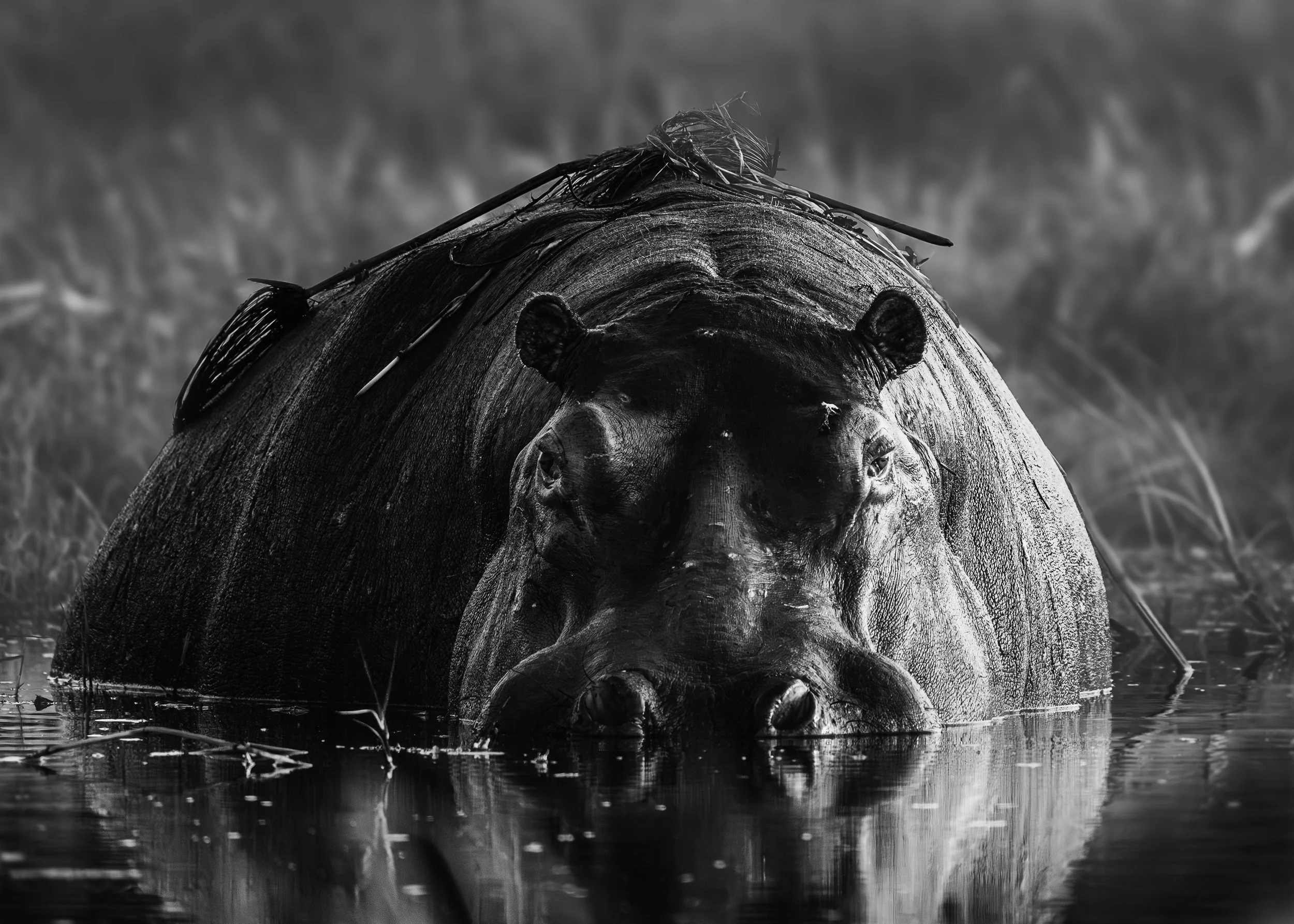
Why I continue to work this way
I do not photograph wildlife to chase spectacle. I photograph it to document presence.
Black and white helps me stay focused on that goal. It keeps the process simple. It keeps the editing honest. And it keeps the final image grounded in what was actually there.
I work in colour too — and I am serious about it. But black and white is always the starting point for me. It is where I begin. It is what feels most natural for both the subjects I photograph and the way I work.
Over time, I have learned that these are the photographs people return to — the ones that do not try to impress, but continue to hold attention. The ones that feel like they were always there.
That is the case for monochrome. Not as a style. As a way of seeing.