

From Field to Print: The Process Behind a Fine Art Wildlife Photograph
A wildlife photography print begins with a moment that cannot be repeated — a breath, a glance, a quiet movement in the wild. Yet what you see framed on a wall or displayed in a collector's home is the final expression of a much longer process.
Behind every print lies patience, instinct, and a commitment to create something that carries emotion and presence for years to come.
Fine art wildlife photography is not simply about capturing animals. It is about transforming a real encounter into an artwork that feels honest, intentional, and alive.
In the field: preparing for the moment that matters
The creation of a wildlife photography print starts in the wild. It begins with understanding the landscape, the animals, and the rhythm of the environment.
Wildlife moves at its own pace. Hours or days may pass before the right moment reveals itself — a moment that feels genuine, not staged. I spend most of my time in the field watching. Not photographing. Just watching. Learning where the light falls at which hour. Noticing how the animals use the space. Understanding the patterns that repeat and the ones that do not.
Field preparation means reading the light throughout the day, recognising animal behaviour and anticipating movement, previsualising the scene I want to capture, and staying patient enough to wait for it. Patience is not a romantic quality in this work. It is a practical requirement. Without it, you photograph what is convenient. With it, you photograph what is true.
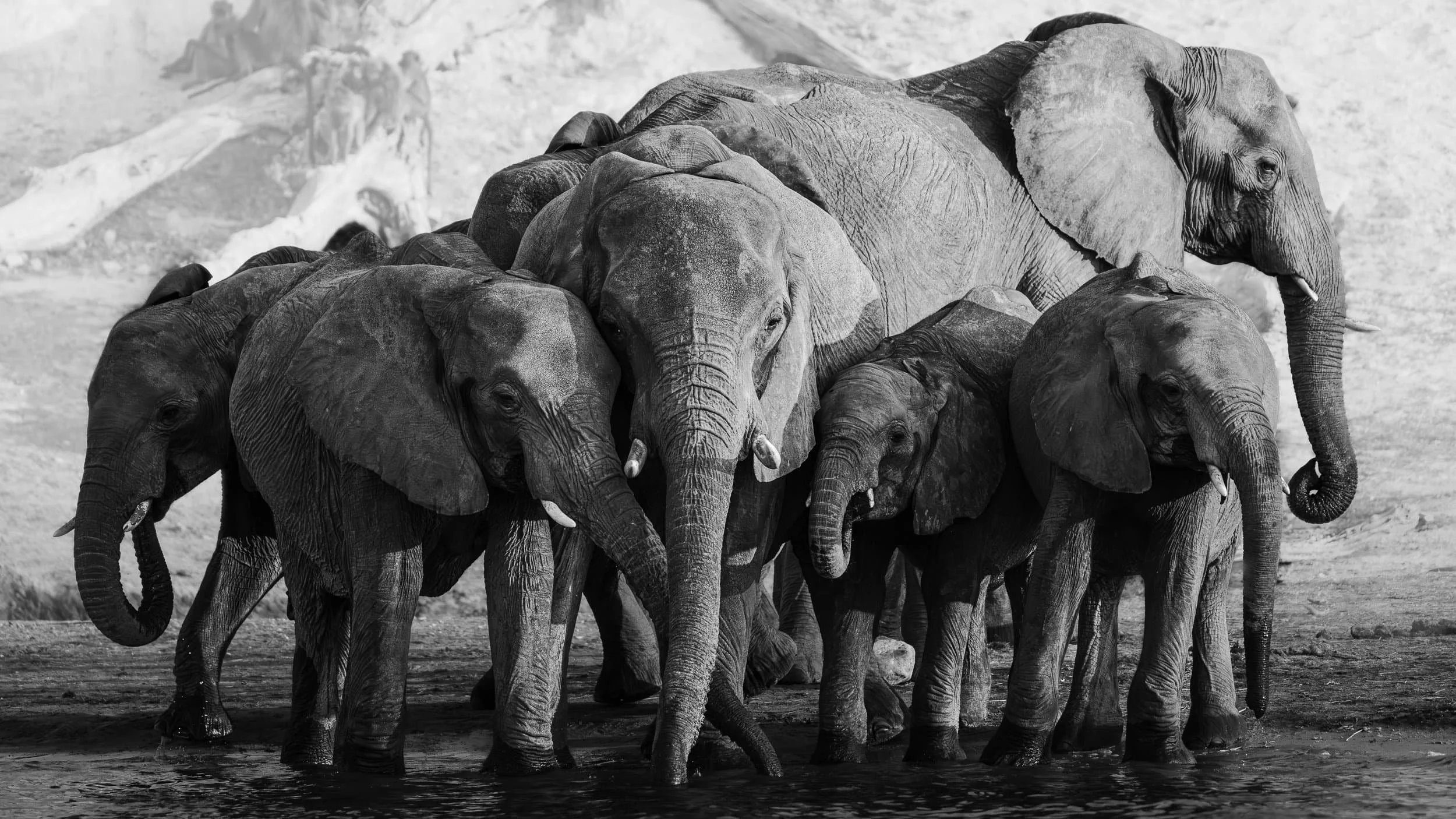
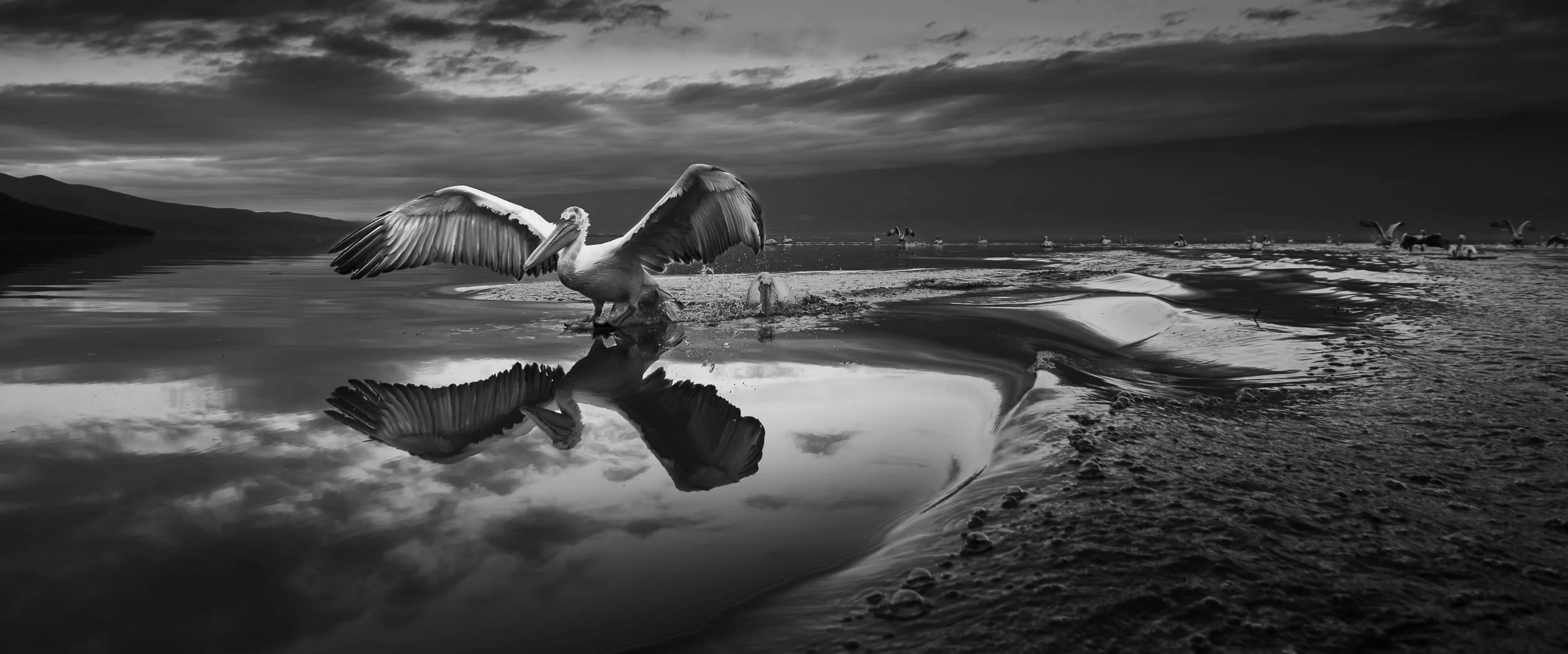
When that moment finally arrives — the subtle turn of a lion's head, an elephant stepping into soft morning light, a pelican lifting from still water — it happens quickly. Instinct and preparation must work together. There is no second take.
This is where the foundation of a powerful wildlife photograph is created. Not in the studio. Not on the computer. In the field, standing in the cold or the dust or the silence, waiting for the world to offer something real.
The artistic eye: turning reality into meaning
A photograph becomes fine art through intention.
When I raise the camera, I am not trying to record what is in front of me. I am looking for something deeper — structure, mood, balance. I am paying attention to the lines, tones, and silence within the frame.
The goal is not perfection. The goal is expression.
Light shapes mood. Composition that feels natural yet purposeful. The emotion that emerges from the subject rather than being forced onto it. An atmosphere that gives the moment weight.
A fine art wildlife photograph must speak quietly and confidently. It must carry the presence of the animal, not just its appearance. This is what separates the work from wildlife documentation — the intent to say something about the encounter, not merely to prove it happened.
Post-processing: refining the moment with integrity
After returning from the field, the next stage is refinement — a careful process that prepares the image for print while preserving the truth of the moment.
In my approach, post-processing is subtle. It enhances the natural qualities of the scene without altering reality. I am not constructing images. I am revealing what was already there — the depth, the atmosphere, the clarity that the camera captured but the file does not yet fully express.
The focus is on revealing depth and atmosphere, bringing clarity to natural tones, and ensuring the final work reflects the feeling of the moment as I experienced it.
For black and white work, the conversion is a separate creative decision. Which tones become light, which become dark, how the contrast shapes the emotional tone of the image — these choices are part of the artistic process, not an afterthought. A black and white photograph is not a colour photograph with the saturation removed. It is a different image entirely.
This stage requires restraint. It is easy to push too far — to add drama that was not present, to sharpen details that should remain soft, to darken shadows for effect rather than truth. The discipline is knowing when to stop.
The print: where the work becomes real
A fine art photograph is not complete on a screen.
The physical print is the final artwork. It is where the image becomes something you can live with — something that occupies space, responds to light, and changes subtly depending on the time of day and where you stand.
Paper choice, tonal depth, size, and finish all affect how the photograph is experienced. I work with museum-grade archival paper and pigment-based inks — materials designed to hold their quality for a lifetime. The paper itself becomes part of the image. Its texture, its weight, the way it absorbs and reflects light. These are not technical details. They are part of the experience.
Printing at scale changes the image again. A photograph that feels intimate on a screen becomes powerful at a metre and a half wide. Details that were invisible become prominent. The tonal range opens up. The viewer is no longer looking at a photograph — they are standing in front of one.
Each print is signed, numbered within its edition, and accompanied by a certificate of authenticity. This is the final step — the moment when the image transitions from my process to someone else's life.
From artist to collector
When a collector receives a wildlife photography print, they are receiving more than an artwork. They are receiving a real moment from the wild — one that I waited for, witnessed, captured, refined, and crafted into something meant to last.
What began in silence — the rustle of grass, the breath of an animal, the light arriving slowly across a river — becomes part of a home or a gallery. It offers presence and emotion each time someone walks by.
That is the journey from field to print. And that is the work I am committed to.
Explore the Fine Art Print Collections →