

Echoes of Chobe: Photographing the Elephants of the River
I went to Botswana once. One trip. It was my first African wildlife project, and I did not know it was going to become a project until I was back home, weeks later, sitting in front of the edit.
That sounds strange to say. You fly across the world with a camera, you spend days in the field, you come back with thousands of frames — and you do not know what you have until much later. But that is how it worked for me. I went to Chobe thinking I would come home with wildlife photographs. I came home and discovered I had the beginning of a body of work.
The difference between those two things is everything. And it is the reason Echoes of Chobe exists.
The river
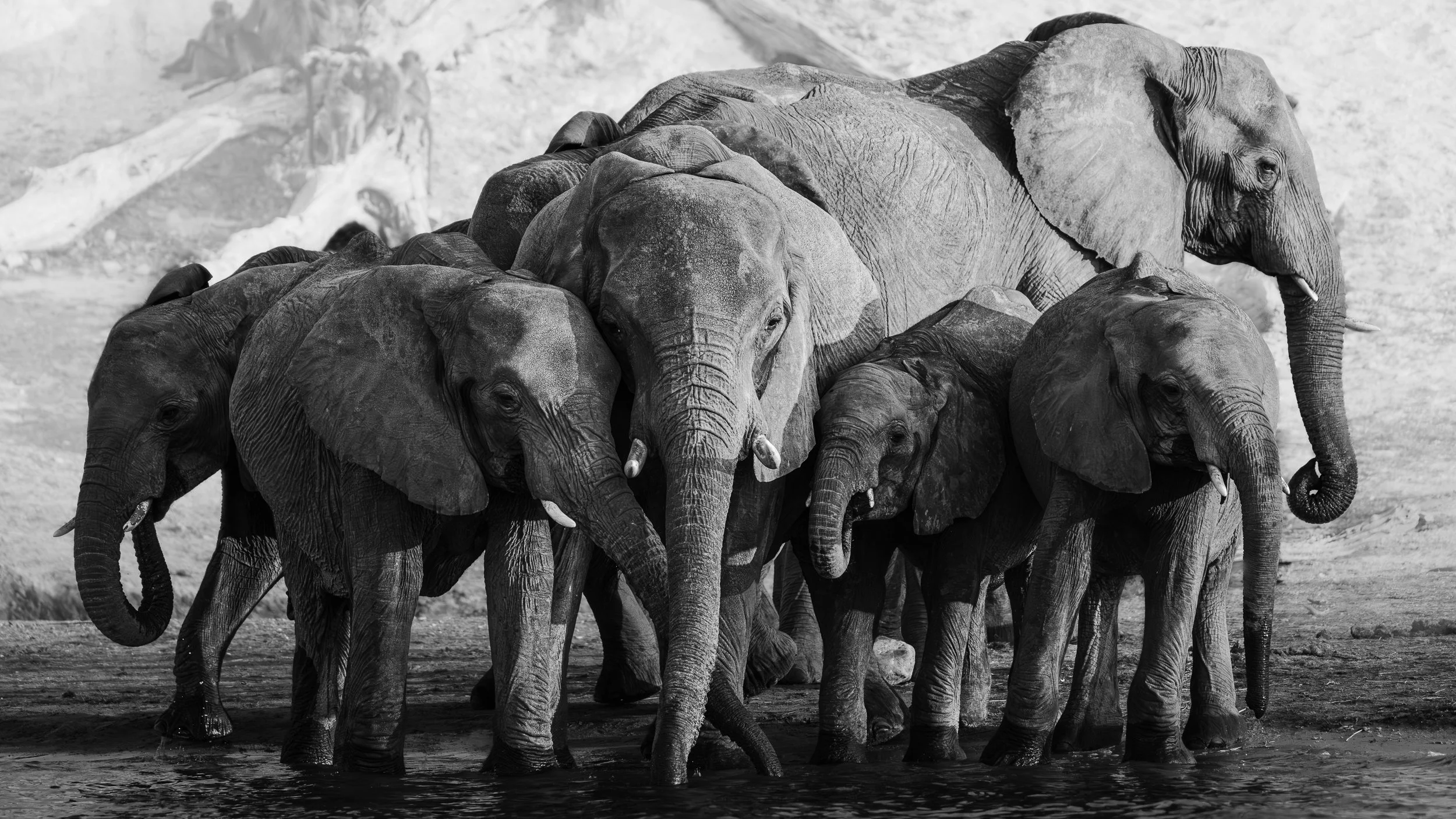
The Chobe River sits along the northern edge of Botswana, forming part of the border with Namibia. It is one of the most densely populated elephant habitats in Africa. In the dry season, when water becomes scarce elsewhere, herds gather at the river in numbers that are hard to describe until you see them. Hundreds of animals. Families moving through the shallows. Young elephants learning how to drink, how to bathe, how to be an elephant.
I had read about this before I went. Everyone who photographs African wildlife knows about Chobe. But reading about it and standing beside it are different kinds of knowing. When you are there, the scale of the place is the first thing that undoes your assumptions. Then the light. Then the animals themselves.
What I did not expect was how well it all worked. Chobe National Park is protected, well-managed, and genuinely thriving. The elephants are not clinging on. They are not the last of anything. They are a population that has been allowed to exist — through good policy, serious conservation, and a tourism model that funds the protection of the place rather than eroding it. You go there to photograph elephants and you end up witnessing something more important: what it looks like when conservation actually works.
That realisation matters to me. I do not make photographs about endangered animals as symbols of loss. I make photographs about animals that are still here, still powerful, still thriving in places where people have decided to let them. That is the case for wildness I want my work to make, and Chobe is where that case began.
Shooting without a plan
For the first few days in Chobe, I shot the way most people shoot on safari. The vehicle stopped, the animals were there, I worked quickly to capture whatever was in front of me. A herd drinking. A young elephant playing. A big bull walking along the riverbank. Good moments. Sharp exposures. The kind of photographs anyone with a decent camera and a good guide can come home with.
None of them are in the final collection.
They are not bad photographs. Some of them I still like. But they are records. They document what I saw. They do not do the thing that a work of art has to do — they do not interpret. They do not say anything beyond this happened, and I was there. Looking back, I can see that I was being reactive. I was chasing the animals instead of waiting for the photographs.
Something shifted in the last days of the trip. I am not sure exactly when or why — but by the final morning or two, I was shooting with an end in mind. Not a specific image. A feeling. I wanted to capture the river as a space where stillness and movement meet. I wanted the elephants to feel monumental and intimate at the same time. I wanted the light to carry weight. I started passing on photographs I would have taken earlier in the week because they did not fit what I was building toward.
That is what intention does to photography. Once you have it, everything before it starts to look thin.
The edit that made it a project
I came home with thousands of frames. I sat down to edit, expecting to find my favourite wildlife photographs from the trip and call it done. That is how I had worked before.
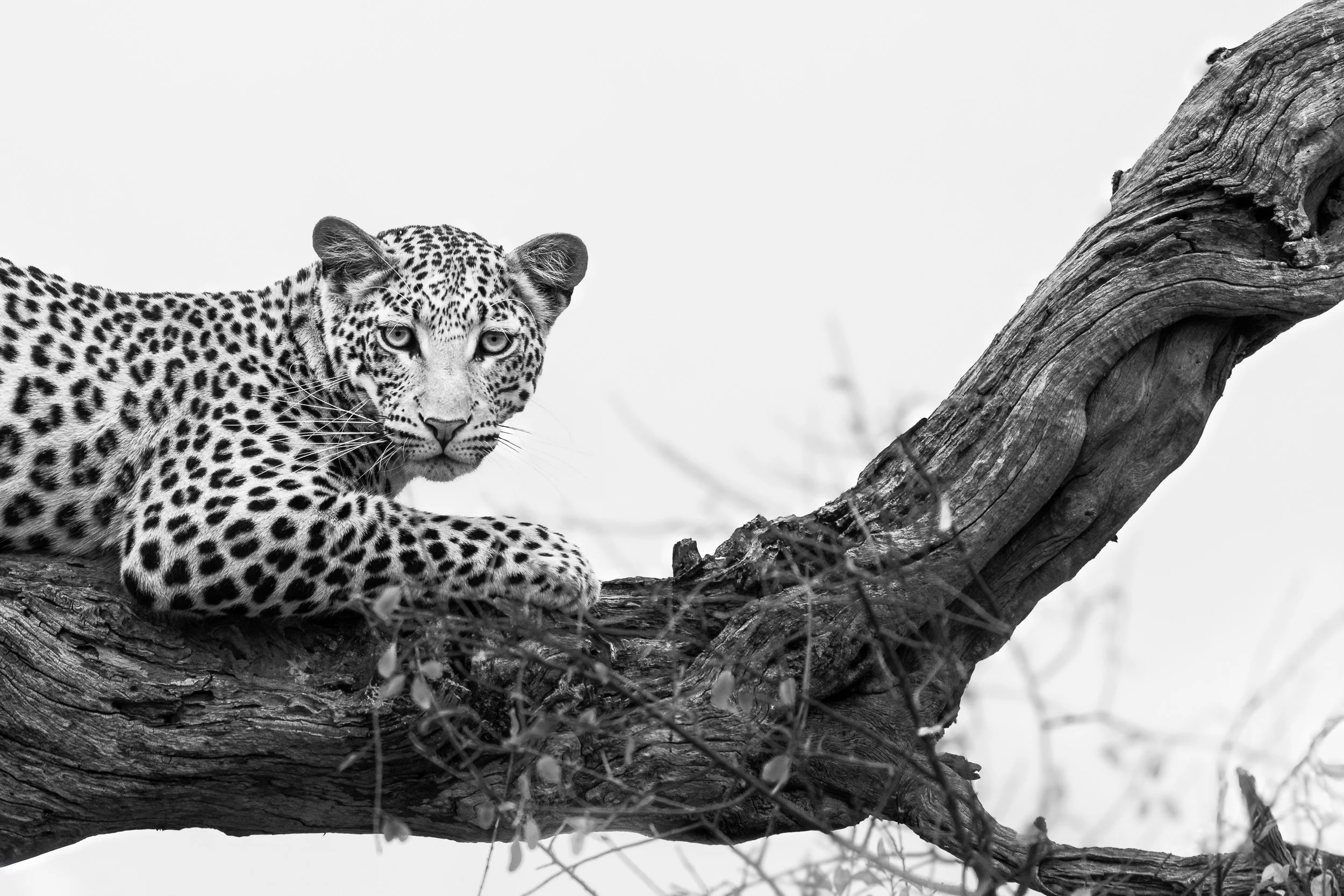
Instead, I found something else. I found that certain images talked to each other. An elephant half-submerged in water at dawn answered a different elephant walking through dust at midday. A close portrait of an eye held a conversation with a wide scene of a herd crossing the river. Without planning it, I had photographed the same ideas from different angles — the relationship between elephants and water, the architecture of their bodies, the way they carry themselves through space. I had made a project without meaning to.
And I had also made a lot of photographs that did not belong. Photographs that were sharp and correctly composed but had nothing to say in the context of the rest. I cut them. Hundreds of them. The first serious lesson of Echoes of Chobe was learning to kill photographs I liked because they did not serve the series.
This is the moment I stopped thinking like a safari photographer and started thinking like a fine art photographer who works in projects. The field work matters. The light matters. The animals matter. But the work is made in the edit. The work is made in the decisions about what to keep and what to let go — and those decisions are the first place an artistic vision becomes visible.
The Chobe edit taught me that I was capable of that kind of decision-making. And it changed everything I have done since.
Why black and white
Echoes of Chobe is an entirely black and white series. That was not a decision I made before the trip. It was a decision I made during the edit, and once I made it, I could not imagine the work any other way.
Colour would have told a different story. A Botswana story. Orange light at dawn, dust at midday, the red-brown of elephant skin, the green of river vegetation. Beautiful, but located. Specific to a time and a place in a way that pulls the viewer outward, toward the travel experience — the safari, the landscape, the exotic context.
Black and white does something else. It strips the elephants out of their postcard. It removes the travel-photography associations. It forces the eye onto form, tone, and presence. The elephants become bodies in space, sculptures made of skin and weight and breath. The river becomes light on water. The scene becomes composition. What you are left with is the animal as a presence, not as a specimen of a place.
This is what I wanted. Not Botswana wildlife photography. Elephants as a subject in themselves. Elephants as they exist when you stop thinking about where they live and start thinking about what they are.
What the elephants taught me
I did not understand elephants before Chobe. I understood what they looked like. I had seen the photographs, the documentaries, the nature specials. I knew they were big, intelligent, socially complex. I knew the conservation story. I knew the shape of them.
I did not know what it felt like to watch them.
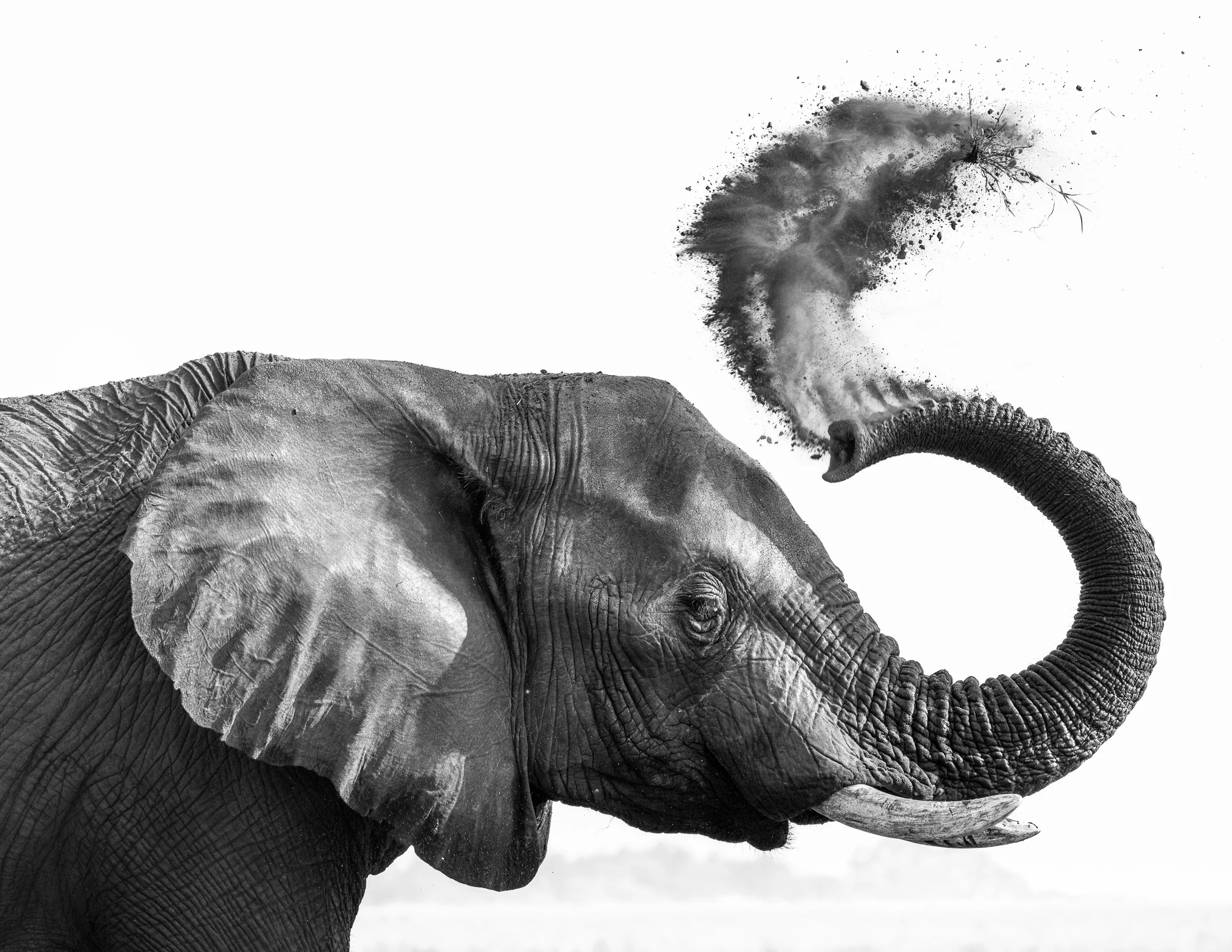
Elephants are endlessly interesting animals — not just because of how they look, but because of how they behave and how much you can learn from them if you pay attention. They are deeply social. They grieve. They remember. They teach each other. A herd moving through the landscape is not a group of individuals going in the same direction — it is a coordinated social organism with hierarchies, relationships, and memory. The matriarchs lead. The young follow and learn. The bulls circle at the edges. Every interaction I watched had layers of meaning I was only beginning to read.
And they have patience. This is what changed my photography the most. Elephants do things slowly. They move, they drink, they bathe, they rest — all at a pace that rewards waiting. If you are looking for the dramatic moment, the kill, the charge, the spectacle, elephants are frustrating to photograph. But if you are looking for presence, for weight, for the quiet force of a creature that has nothing to prove — elephants give you everything you need if you slow down to meet them.
Watching them taught me to slow my own work down. To stop looking for action and start looking for meaning. To hold the camera and wait, not because the decisive moment was coming, but because the animal itself was the moment. That lesson has travelled with me into every project since — including the most recent African work, The Heart of the Wild, a black and white series from the Maasai Mara built on the same patience Chobe first demanded.
The first of many
Echoes of Chobe is now a limited edition series in my collection. Each print is signed, numbered, and printed on museum-grade archival paper. Collectors have started to find it. Elephants from the Chobe River now live on walls in homes I will never visit, in conversations I will never hear.
But its real meaning for me is not commercial. It is the project that taught me how to work. Before Chobe, I was a photographer who went out and made photographs. After Chobe, I was a photographer who went out with a project in mind — who shot with intention, edited with discipline, and understood that a body of work is not a portfolio of greatest hits but a sustained argument about something the artist believes in.
Every collection I have made since — The Land of Ice, The Kingdom of Pelicans, The Incomparable Valley, and most recently The Heart of the Wild — started from the lesson Chobe taught me. That a project is not a destination. It is a way of thinking. And once you find it, you cannot go back.
I went to Botswana once. I came home with the beginning of everything.
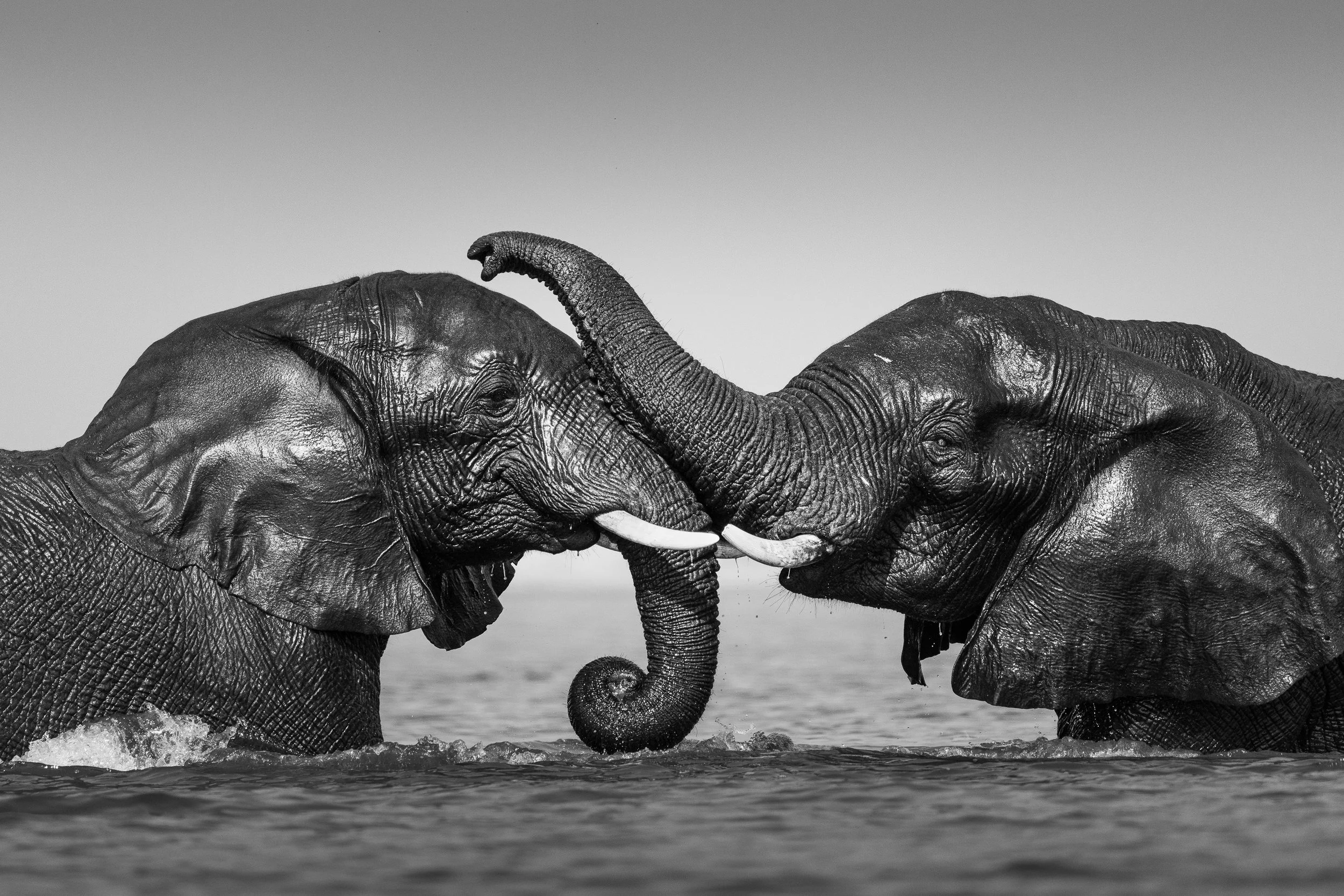
Explore the collection: View Echoes of Chobe — limited edition black and white elephant photography →
Interested in a print? Submit a print enquiry →