

Beyond the Snapshot: When Safari Photography Becomes Fine Art
Everyone who goes on safari takes photographs. Thousands of them. The vehicle stops, the lion lifts its head, and twenty cameras fire at once. Every phone, every rented telephoto, every compact — they all capture the same animal in the same light from the same angle.
Some of those photographs are good. Sharp, well-exposed, correctly framed. The lion looks like a lion. The light is golden. The background is soft. Post it on Instagram, get a hundred likes, move on to the next sighting.
But none of that makes it art.
I have been in those vehicles. I have sat next to people who took the same photograph I took — the same animal, the same moment — and produced something entirely different. Not because my camera was better. Because I was not trying to capture a moment. I was trying to make something that would outlast it.
That is the line between a safari photograph and safari photography as art. And the line is wider than most people think.
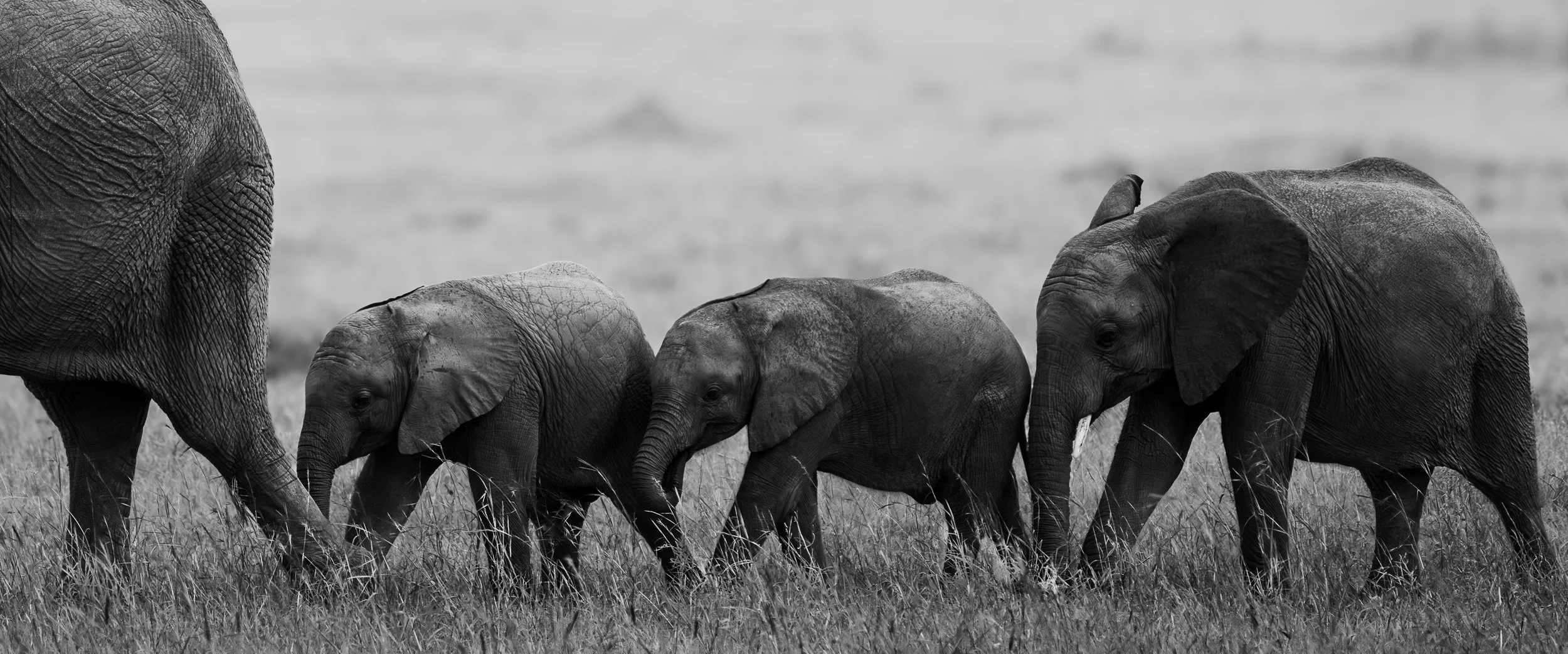
The snapshot records. The photograph interprets.
A snapshot is a record. It says: I was here. This happened. Look what I saw. There is nothing wrong with this. Travel memories are precious, and nobody should feel bad about filling a phone with safari images. A record is honest. But a record is not an interpretation.
Fine art photography interprets. It takes the raw experience — the light, the animal, the landscape, the feeling of being in a wild place — and filters it through a specific artistic vision. It makes decisions that most people with cameras never think about. Not just what to include in the frame, but what to leave out. Not just when to press the shutter, but when to wait. Not just how to expose the image, but why this exposure tells a different story than another one.
The difference between a snapshot of an elephant and a fine art photograph of an elephant is the same as the difference between a diary entry and a poem. Both describe experience. One does something more. The diary entry captures the facts. The poem captures what the facts meant.
This is what makes safari photography art when it is done with intention — it moves beyond documentation into meaning.
What safari guides cannot give you
Safari guides are brilliant at finding animals. The good ones understand light, positioning, and behaviour. They read the landscape the way a fisherman reads water. They will get you close to the animals. They will put you in the right place at the right time.
What they cannot give you is vision.
Vision is the reason two photographers in the same vehicle, with identical equipment, pointing at the same animal, produce completely different results. One sees a lion. The other sees a study in tension, or solitude, or the weight of survival written into an animal's posture. One wants a sharp image. The other wants an image that carries weight — that someone would want to live with on their wall for the next twenty years.
This is what separates the safari photographer from the fine art photographer. It is not skill — though skill matters. It is not equipment — though equipment matters. It is the question they are answering. The safari photographer asks: Did I get the shot? The fine art photographer asks: Did I make something worth keeping?
And "worth keeping" is a high standard. It means the photograph holds up on a second look. A tenth look. A thousandth look. It means the image reveals something new each time you return to it. It means the photograph can survive being printed at serious scale, framed with museum-grade materials, and hung in a room where it will be seen every day for years. Most safari snapshots — even the beautiful ones — cannot survive that test. They are too literal. Too dependent on the novelty of the animal. Once you have seen a lion, you have seen a lion. But once you have seen how a specific photographer sees a lion — that stays with you.
Patience as creative practice
Most safari photography happens in bursts. The vehicle arrives at a sighting. The animal is there. You shoot for five, ten, twenty minutes. The guide moves to the next sighting. By the end of the day you have a thousand frames from fifteen stops, and the assumption is that somewhere in those frames is a great image.
Fine art wildlife photography works on a different clock entirely.
Sometimes I spend hours with a single subject, waiting for a moment that may never come. Not a behaviour moment — not the kill, the jump, the roar that makes the dramatic Instagram reel. Something quieter. A shift in light across the animal's face. A change in posture that reveals something about its presence in the landscape. The moment when everything in the scene — animal, light, background, atmosphere — stops being a collection of elements and becomes a photograph.
This kind of patience is not about discipline or endurance. It is about trust. Trust that the moment exists and that you will recognise it when it arrives. Sometimes it takes two hours. Sometimes it takes three trips to the same place across three different years. And most of the time, it does not arrive at all. You leave with nothing usable. That is part of the process, and learning to accept it is part of becoming an artist rather than a photographer who produces volume.
The photographs that survive this process — the ones that eventually become limited edition prints — are the ones where everything aligned: light, subject, composition, and meaning. You cannot manufacture that alignment. You can only prepare yourself for it and be patient enough to wait.
The craft nobody sees
Even after the moment in the field, the work is not finished. Most people assume the photograph comes straight from the camera to the frame. In safari photography art — in any fine art photography — what happens after the shutter is as important as what happens before it.
The raw file from the camera is a starting point, not a finished product. It is like the first draft of an essay — the structure is there, the content exists, but the voice is not yet refined. The photographer makes decisions about tonality, contrast, luminosity, and mood — not to manipulate reality, but to pull the image toward what the moment actually felt like. Cameras are mechanical devices. They record light. They do not record atmosphere, or tension, or the silence of a riverbank at dawn. The photographer's post-processing work closes the gap between what the sensor captured and what the human experienced.
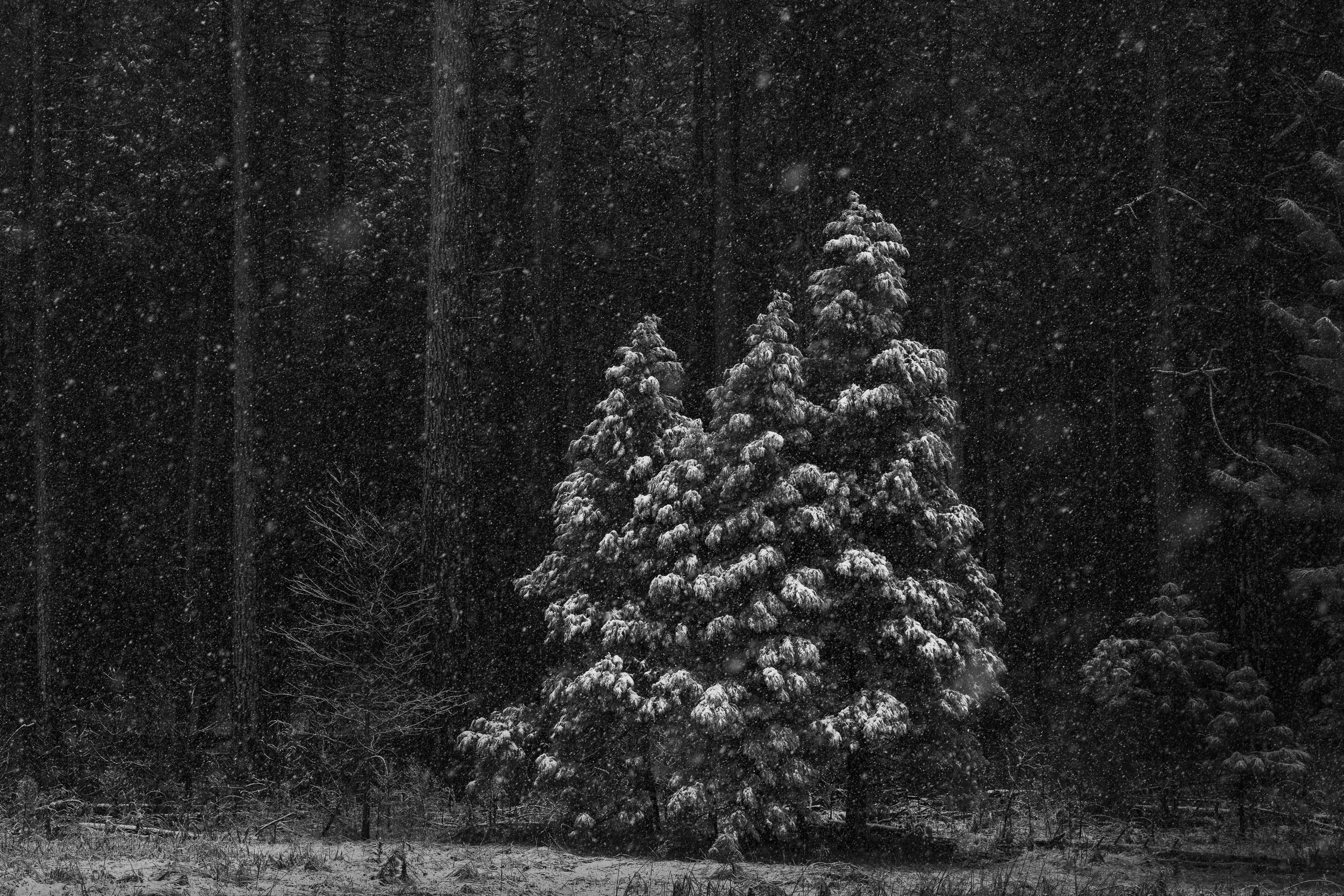
In black and white work, these decisions are even more deliberate. Without colour to guide the eye or establish mood, every tonal relationship in the image carries weight. The conversion from colour to monochrome is itself an artistic decision — not a filter applied, but a complete rethinking of the image's emotional architecture. Shadows become structure. Highlights become breath. The animal is no longer defined by the colour of its skin but by the form of its body and the quality of light falling across it.
Then comes printing. A fine art print on museum-grade archival paper is a fundamentally different object from a print ordered online from a fulfilment service. The paper has texture and weight you can feel in your hands. The archival pigment inks have depth and subtlety that screen-based viewing cannot approximate — blacks that pull you in, highlights that glow rather than glare. The process behind the print is meticulous: colour profiling for each specific paper, test prints for density and tonal range, careful inspection of every finished piece.
This is the craft that transforms a photograph from a digital file into a physical work of art. It is invisible to most viewers. But collectors who have held a museum-quality print in their hands — who have seen the difference between a fulfilment-centre print and an archival fine art print — understand it immediately. The object has presence. It demands to be taken seriously. And it will look the same in a hundred years as it does today.
Why safari photography art matters beyond the safari
Here is the part that most articles about safari photography miss entirely. And it is the part that matters most.
The animals in these photographs are not guaranteed to exist in fifty years. African elephant populations have declined by more than 60% since the 1970s. Lion numbers across the continent have collapsed to a fraction of what they were a century ago. Habitat loss, poaching, and climate change accelerate every year. The wild Africa that people go on safari to experience is shrinking.
Fine art wildlife photography does something that snapshots cannot: it makes a lasting argument for the value of what remains. A snapshot says I saw this. A work of safari photography art says this matters. Look closely. Pay attention. This is worth protecting.
There is a tradition of this in the history of wildlife art. From the conservation paintings of David Shepherd to the haunting, elegiac photographs of Nick Brandt, artists have used their work to make people care about animals they will never meet in person. But much of that tradition has been built on loss — on grief, on the knowledge that what the artist photographed may already be gone. The tone is mourning.
I choose a different register. My work is not elegy. It is evidence. Evidence that wildness persists. That elephants still gather at the Chobe River. That pelicans still descend on Lake Kerkini. That the wild world, for all its fragility, is still here — still powerful, still beautiful, still worth the fight. Not loss — proof.
When a collector hangs a fine art wildlife print in their home, they are not just displaying a photograph. They are participating in a conversation about the value of wildness. They are saying that these animals, these landscapes, these moments of quiet grace are worth preserving — not just as memories in a camera roll, but as presences in our daily lives.
From snapshot to collection
If you have come back from a safari with photographs that moved you — photographs you keep returning to, that remind you of a feeling more than a factual record of a place — you already understand what safari photography art is trying to do. You have felt it. You just made it for yourself instead of finding someone who has spent years refining the same impulse into a coherent body of work.
The next step is recognising that feeling in the work of fine art photographers whose vision is specific and consistent. Artists whose photographs do not just show you what an animal looks like, but show you how the artist sees the animal — and through that, how you might see it differently too.
Look for limited editions, not open runs. Look for archival printing on museum-grade materials, not print-on-demand fulfilment. Look for coherent series — bodies of work organised around a place or a theme — not random portfolios of greatest hits. And look for an artist's voice. A reason the work exists beyond the commercial transaction.
That is the difference between a safari photograph and a work of fine art. One lives on your phone. The other lives on your wall — and it changes the room around it. More importantly, it changes how you see the world it came from. And in a time when that world is shrinking, that is not a small thing.
Explore the collections:View all limited edition fine art photography collections →
Interested in a print?Submit a print enquiry →