Maasai Mara, Kenya 2023
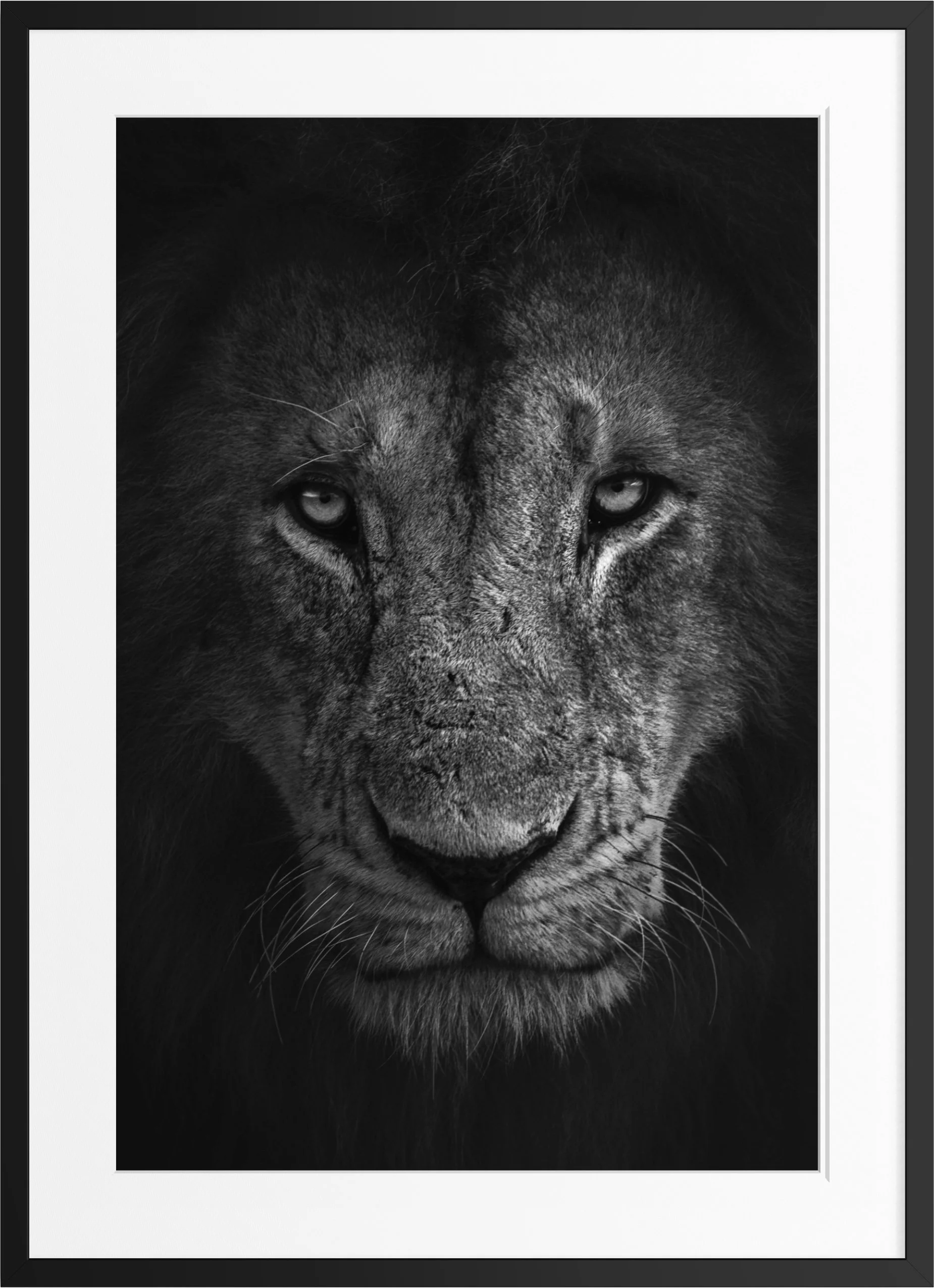
Eye contact is always at the top of my list when I photograph a wild animal, especially for a portrait. The eyes can tell stories stronger than any written copy. For this one I wanted everything stripped down to the face and the look. Technically simple. Emotionally the hardest thing to get right.
What his eyes tell me is presence. Not calm, not warning, not tiredness. Just presence — the fact of him being there, fully, in the moment I was photographing him. Most animals do not give you this. They give you a glance, a reaction, a look that is already on its way somewhere else. He held the gaze long enough for me to compose, focus, and make the frame. That is rare.
The darkness around the face is the mane absorbing almost all the light, which is what mane does in the right angle. I did not fight it. I let the black close in around the face so there was nowhere else for the eye to go. A portrait does not need negative space in the literal sense. It needs somewhere for the viewer to land, and the land in this one is his eyes.
The portrait of a lion will always have a special place in my photography. When I look through the viewfinder at one, what I am seeking is a connection — the kind that does not exist in most human encounters, let alone encounters with wild animals. When it comes, you can feel it before you press the shutter.
This image is from The Heart of the Wild. I want to make portraits of these animals, not documents. That line is easy to say. This frame is what I mean by it.
Maasai Mara, Kenya 2023
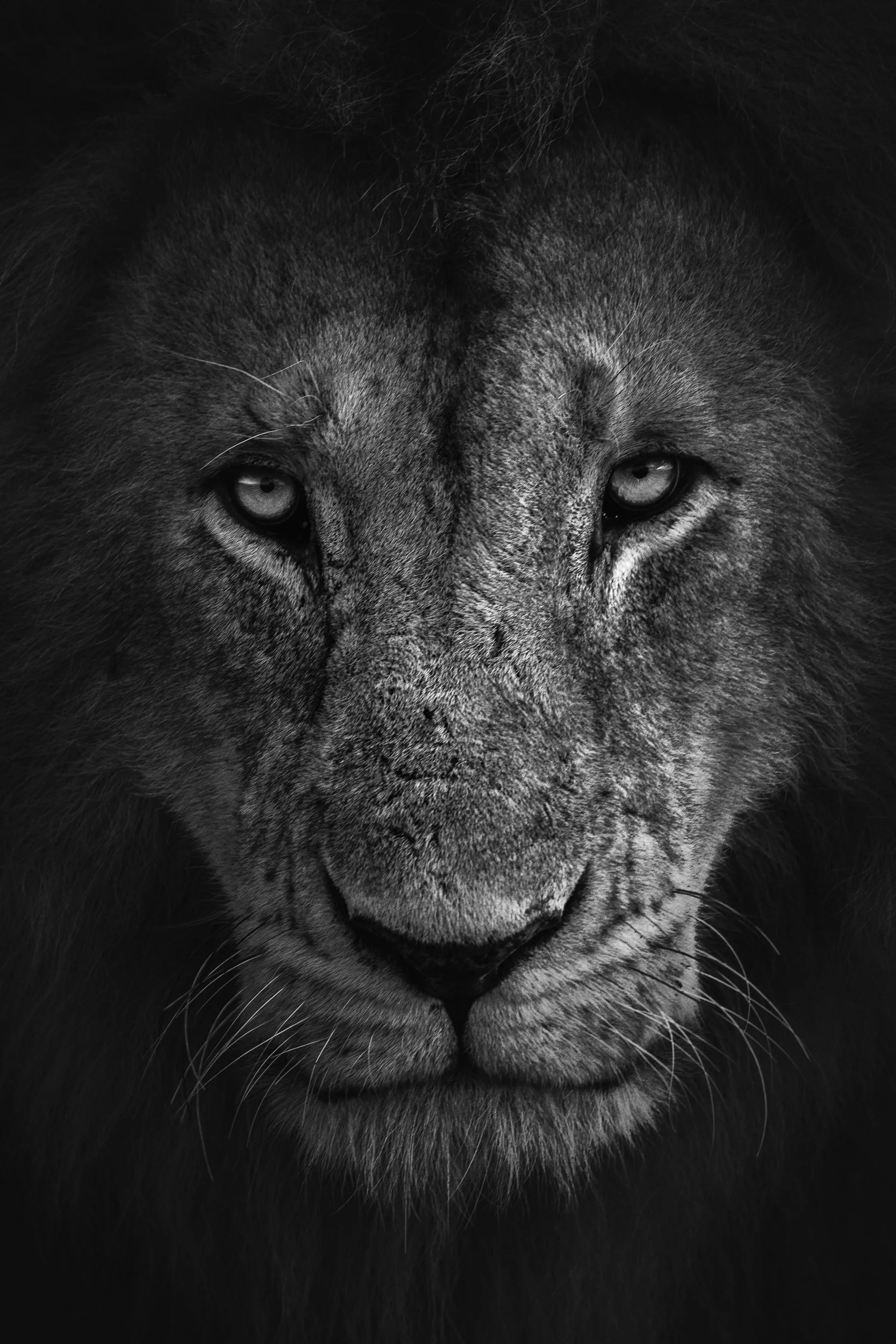
Eye contact is always at the top of my list when I photograph a wild animal, especially for a portrait. The eyes can tell stories stronger than any written copy. For this one I wanted everything stripped down to the face and the look. Technically simple. Emotionally the hardest thing to get right.
What his eyes tell me is presence. Not calm, not warning, not tiredness. Just presence — the fact of him being there, fully, in the moment I was photographing him. Most animals do not give you this. They give you a glance, a reaction, a look that is already on its way somewhere else. He held the gaze long enough for me to compose, focus, and make the frame. That is rare.
The darkness around the face is the mane absorbing almost all the light, which is what mane does in the right angle. I did not fight it. I let the black close in around the face so there was nowhere else for the eye to go. A portrait does not need negative space in the literal sense. It needs somewhere for the viewer to land, and the land in this one is his eyes.
The portrait of a lion will always have a special place in my photography. When I look through the viewfinder at one, what I am seeking is a connection — the kind that does not exist in most human encounters, let alone encounters with wild animals. When it comes, you can feel it before you press the shutter.
This image is from The Heart of the Wild. I want to make portraits of these animals, not documents. That line is easy to say. This frame is what I mean by it.