

Ansel Adams: The Inspiration Behind My Fine Art Collection
Ansel Adams was one of the first photographers I studied when I started photography.
At that stage, I wasn’t thinking about galleries or collectors. I was trying to understand what photography really was. Adams’ work showed me that landscape photography could be thoughtful, disciplined, and deeply intentional. It could stand as fine art.
That early influence stayed with me for years.
And it became the main reason I eventually traveled to Yosemite Valley to photograph my own series there.
This collection is called Inspired by Ansel Adams for a reason.
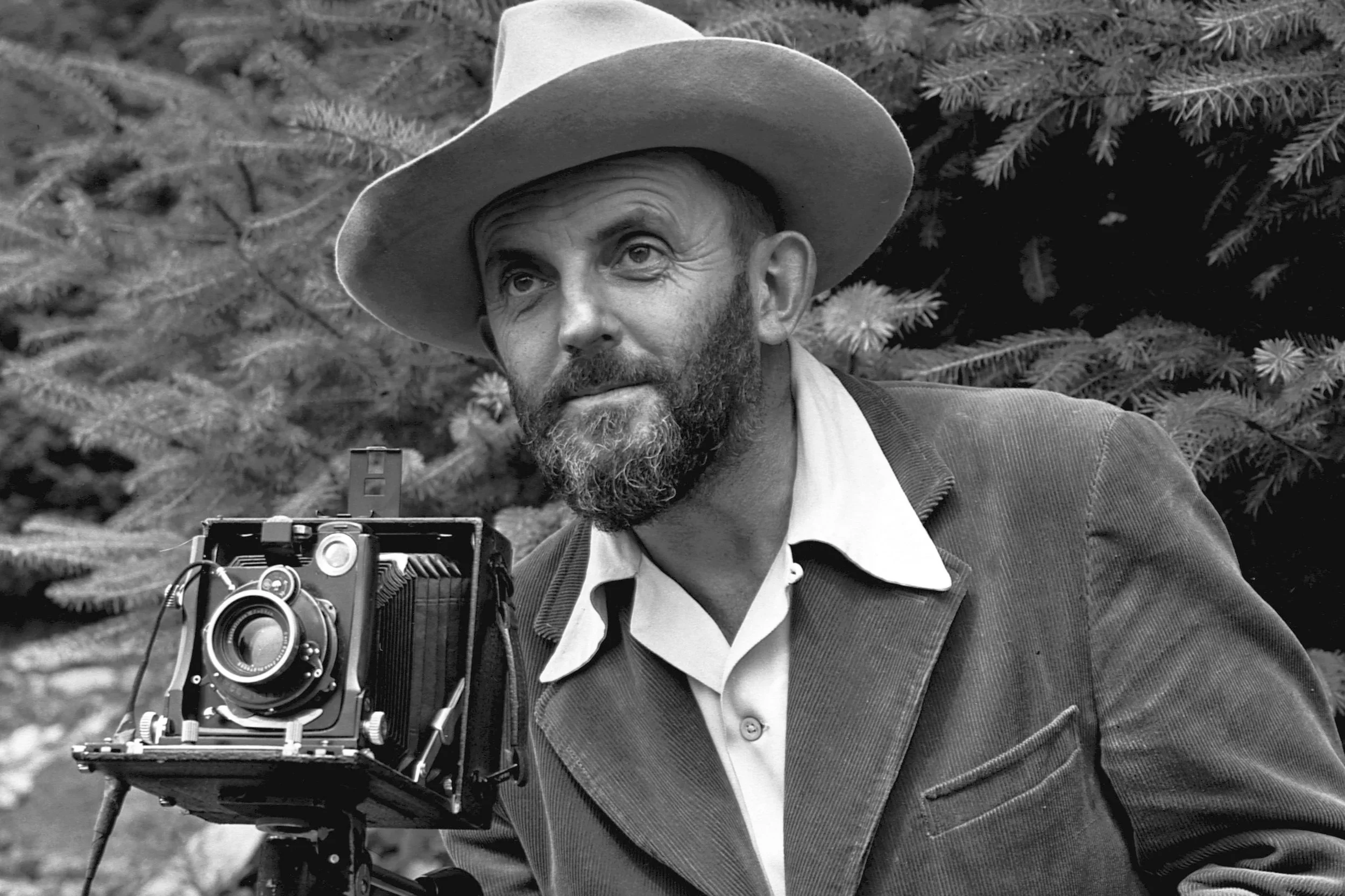
Ansel Adams’ approach to photography as art
Ansel Adams did not treat photography as a reaction to beauty.
He treated it as a process.
Before he pressed the shutter, he already knew what kind of photograph he wanted to make. He thought about light, shadow, balance, and how the final print would feel when someone stood in front of it. This way of working is often described as visualization, but at its core, it’s simply clarity of intention.
For Adams, the camera did not decide the photograph.
He did.
That mindset is why his images feel complete and controlled, even when the landscape itself feels vast and untamed.
Why technique mattered to him
Adams cared deeply about technique, not to show skill, but to gain control.
He wanted to decide how bright a highlight should be, how deep a shadow could go, and where detail should remain.
This thinking led him to co-develop the Zone System, a way to understand and control tones from exposure through printing. The system itself is not the point. The point is that Adams wanted the final print to reflect what he felt in front of the landscape, not what the camera happened to record.
He believed that intention should guide every step.
The darkroom was part of the creative work
For Ansel Adams, the photograph was not finished in the field.
The negative was only the beginning.
In the darkroom, he shaped the image carefully. He adjusted contrast, worked with light and shadow, and refined each print until it matched his vision. He spoke openly about this process and taught it widely. Printing was not correction—it was creation.
This idea strongly influenced how I think about photography today.
A photograph becomes art when the artist decides it is complete.
Yosemite Valley: a long relationship with the land
Adams returned to Yosemite Valley again and again throughout his life.
Not to repeat images, but to understand the place.
He learned how light moved across the granite walls, how clouds and storms changed the mood, and how the same view could feel completely different from one moment to the next. Yosemite was not a subject he passed through. It was a landscape he studied over time.
That depth of relationship is visible in his work.
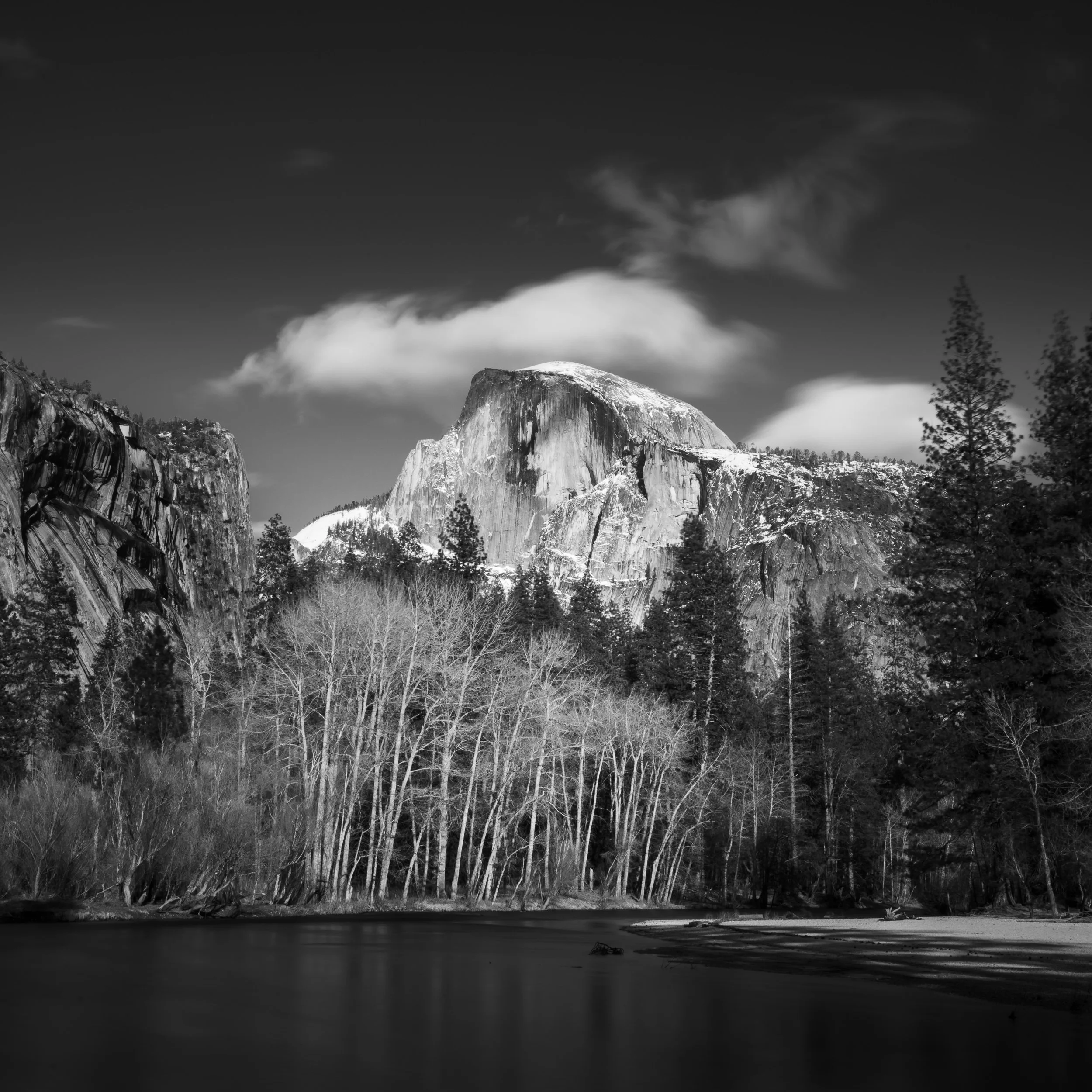
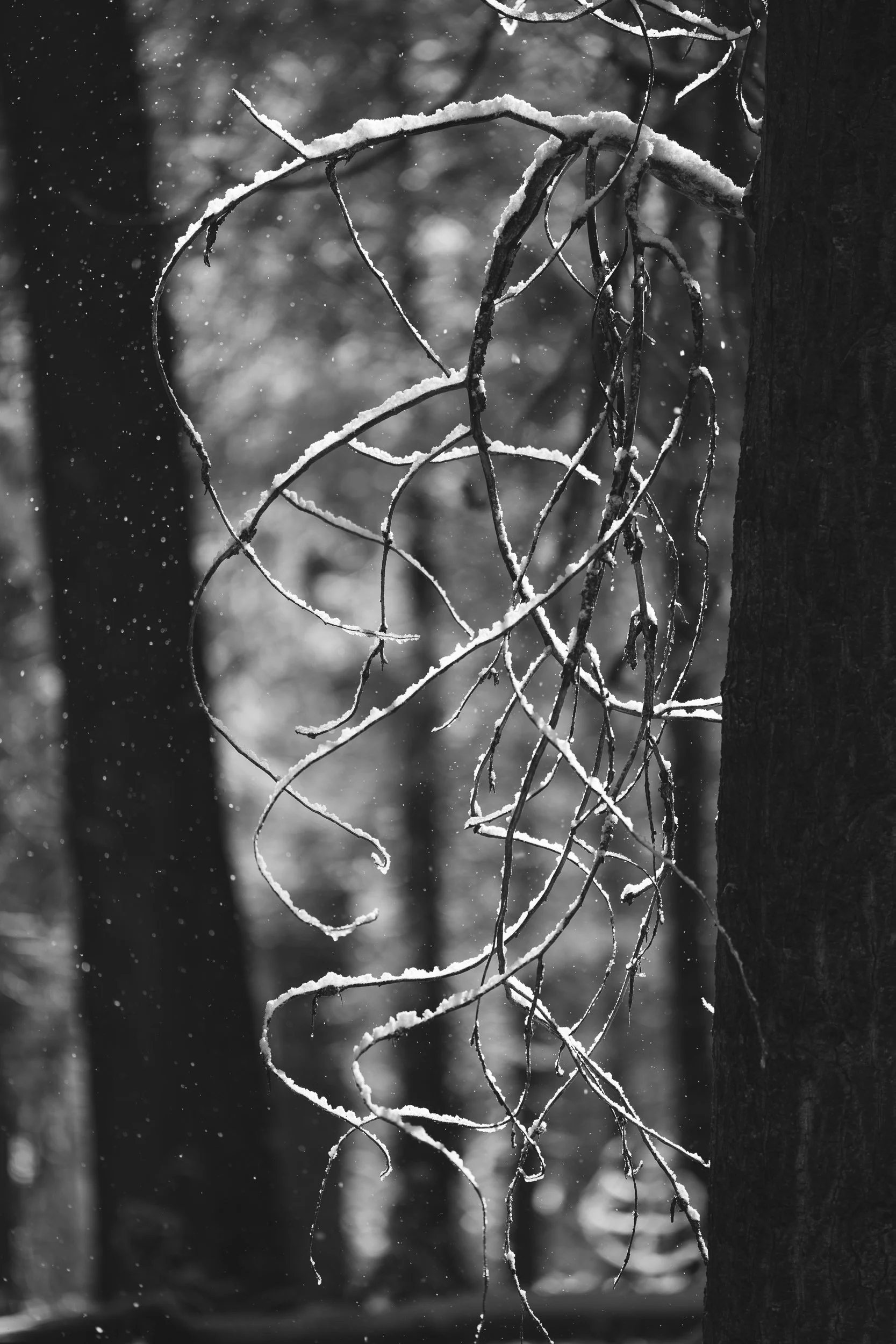
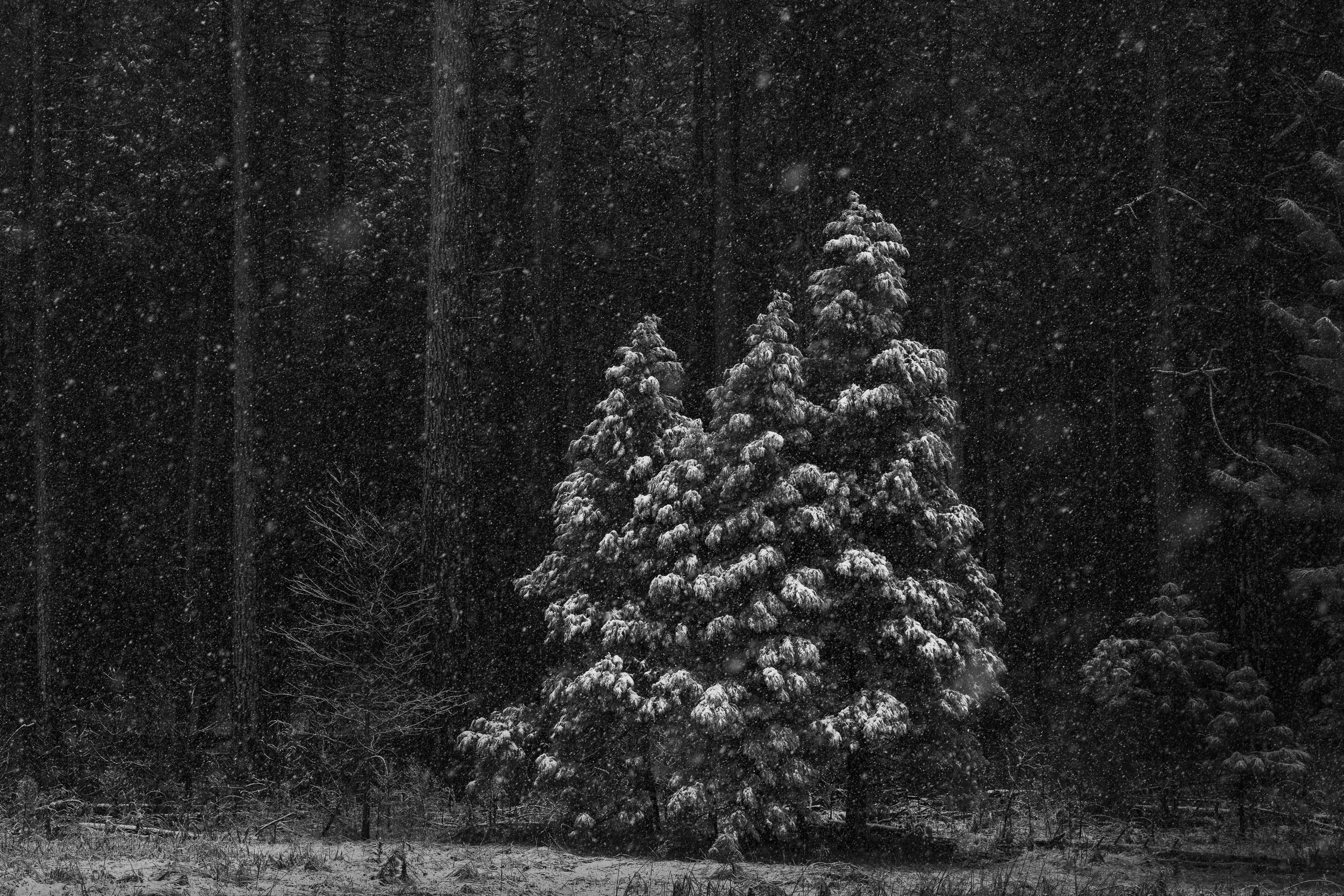
The Pines, from my ‘‘Inspired by Ansel Adams’’ fine art collection
Why I went to Yosemite Valley
I went to Yosemite Valley because Ansel Adams was one of the first photographers who shaped how I see landscape photography.
For many years, I wanted to be there—not casually, but with purpose.
I wanted to photograph the landscape seriously.
To experience it slowly. To understand why this place inspired Adams for so long.
In a personal way, this trip was a way to honor him.
Not by copying his photographs, but by approaching the landscape with the same respect: patience, simplicity, and intention—while staying true to my own visual language.
That was the real reason I went.
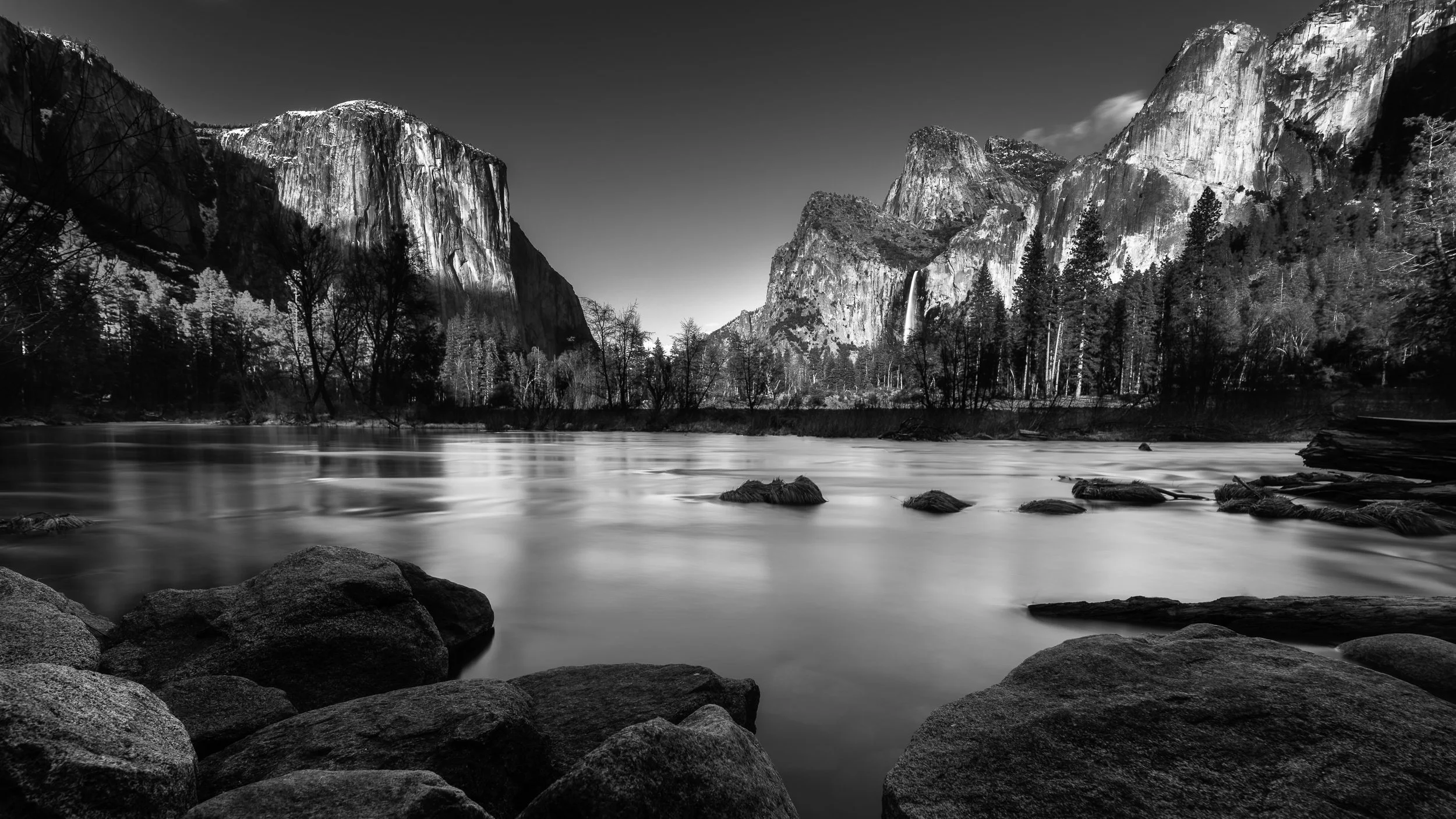
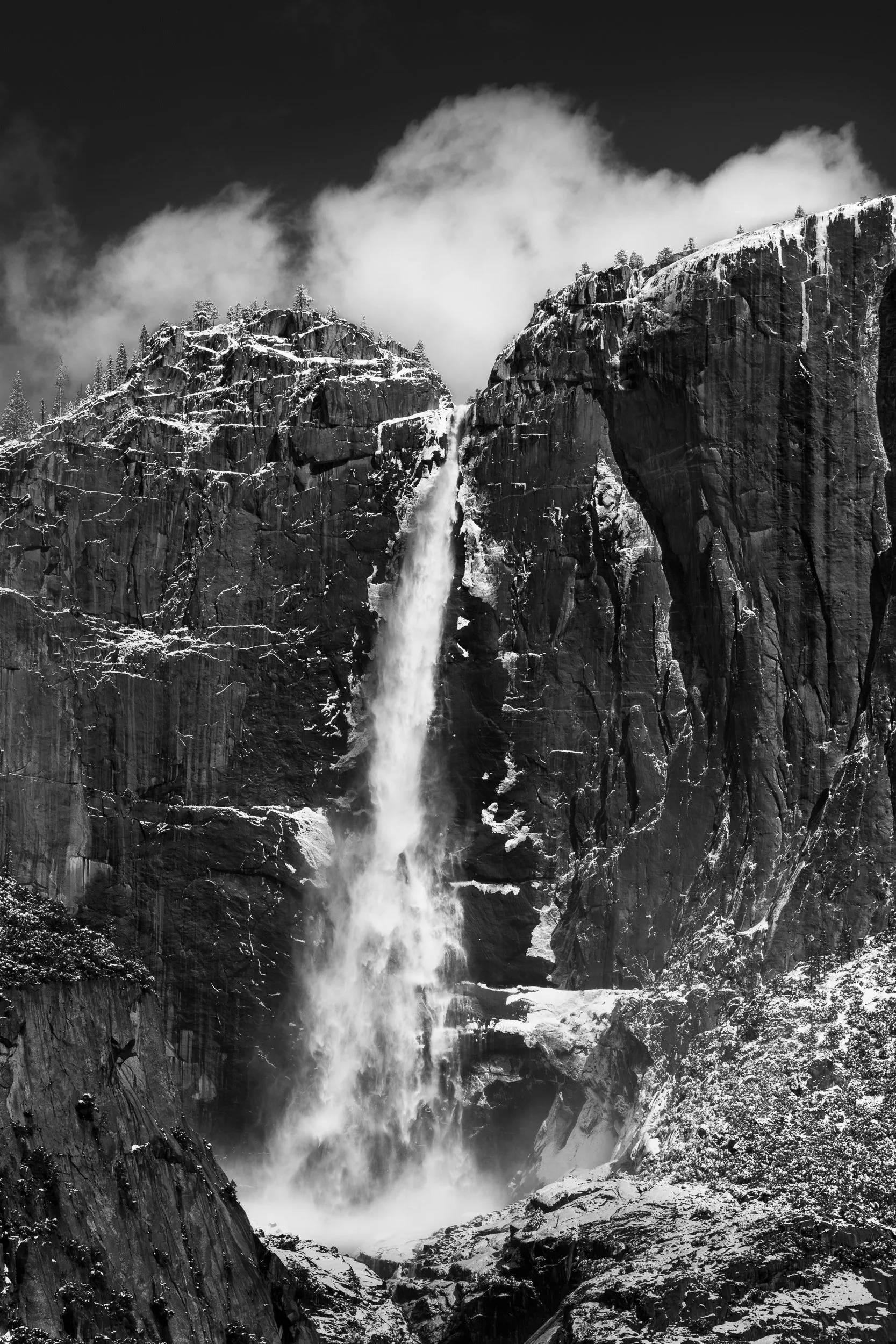
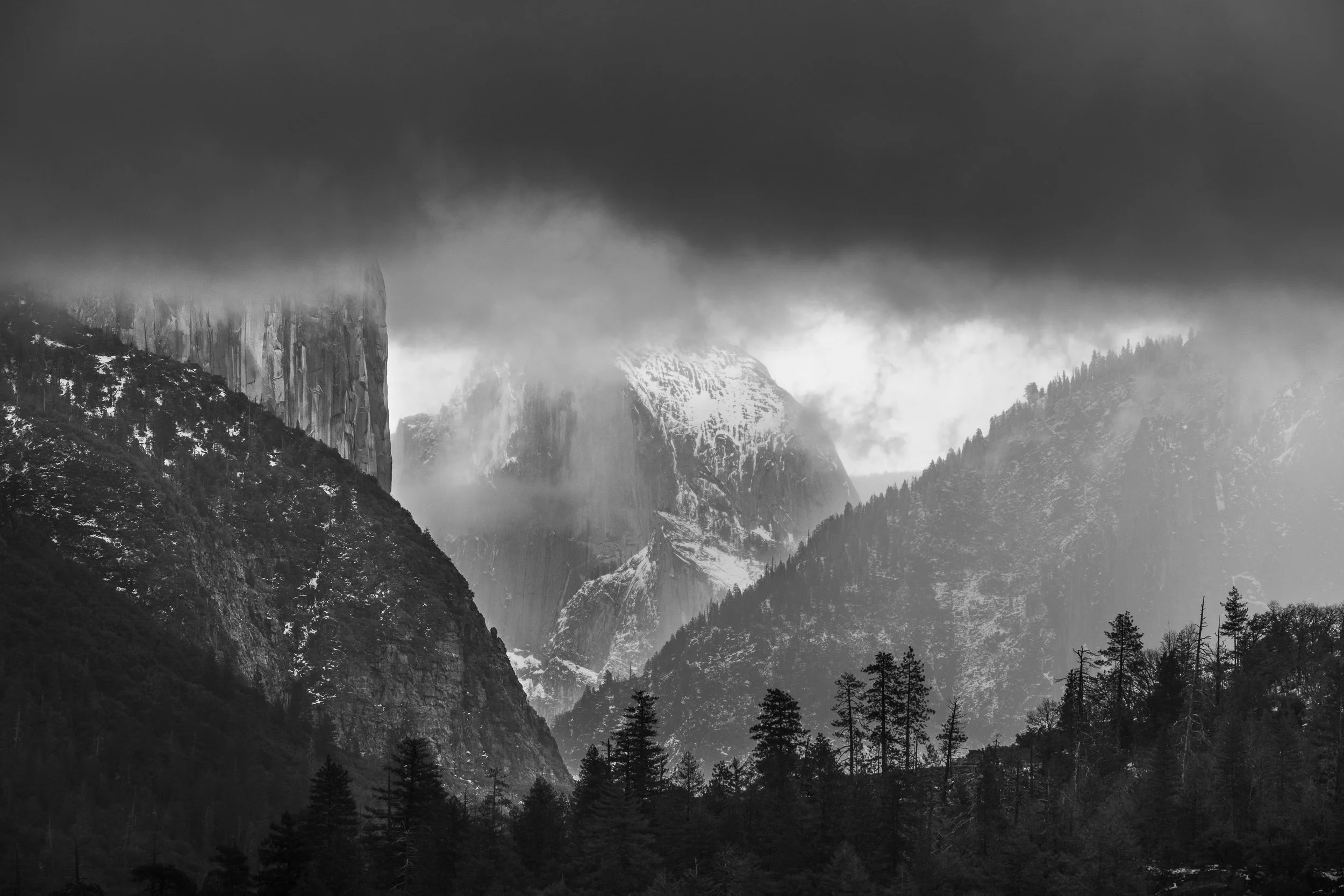
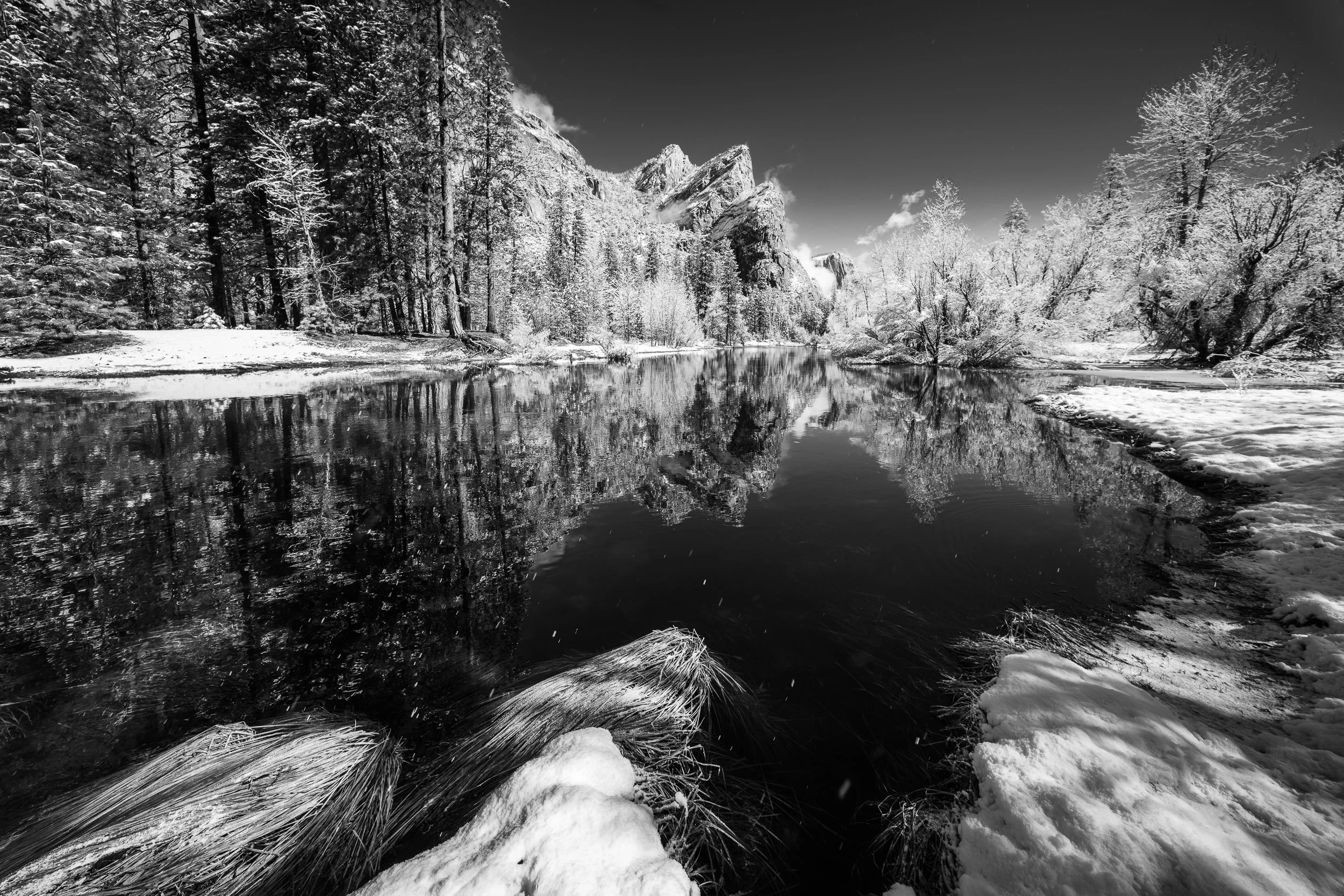
Photographing ‘‘Inspired by Ansel Adams’’
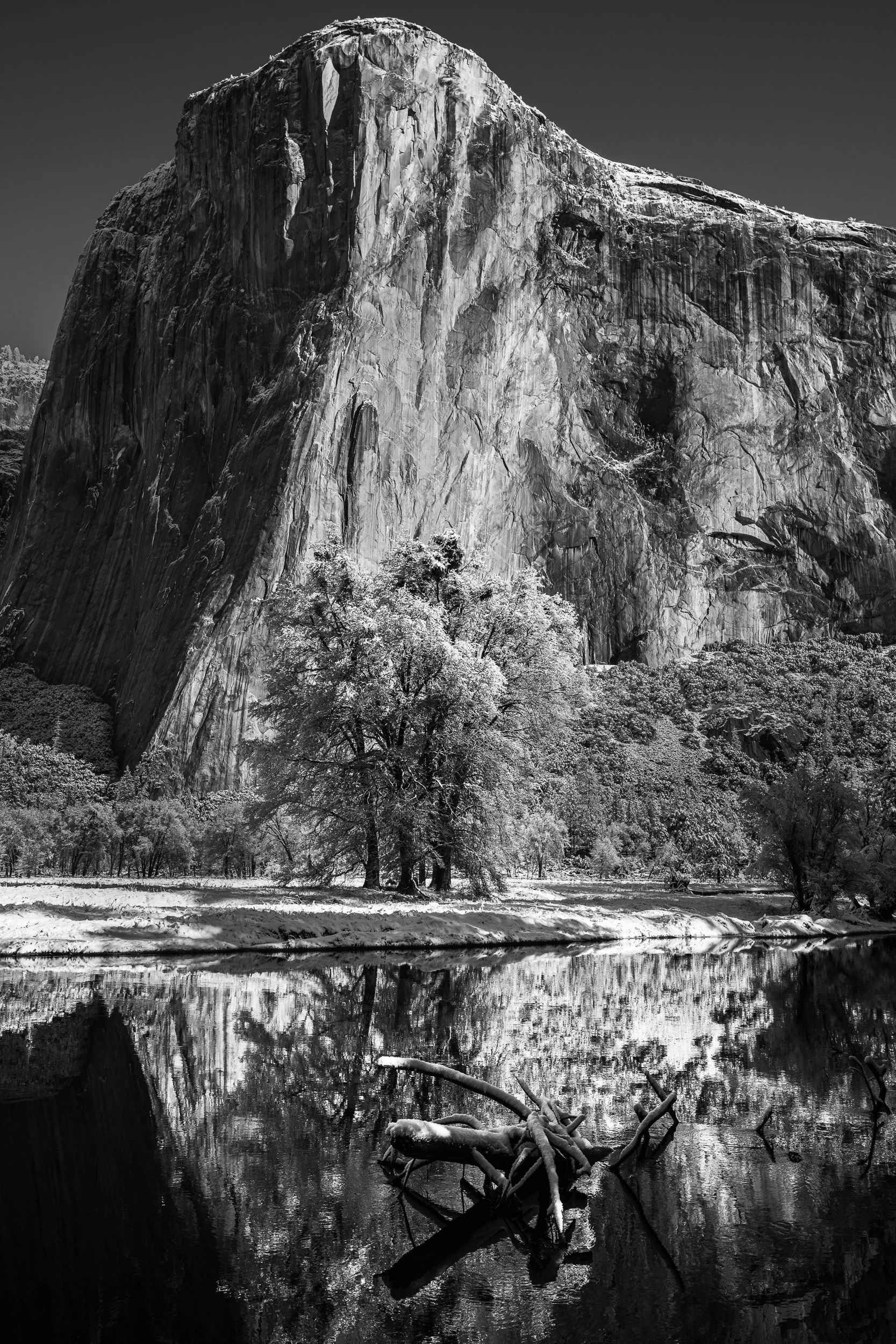
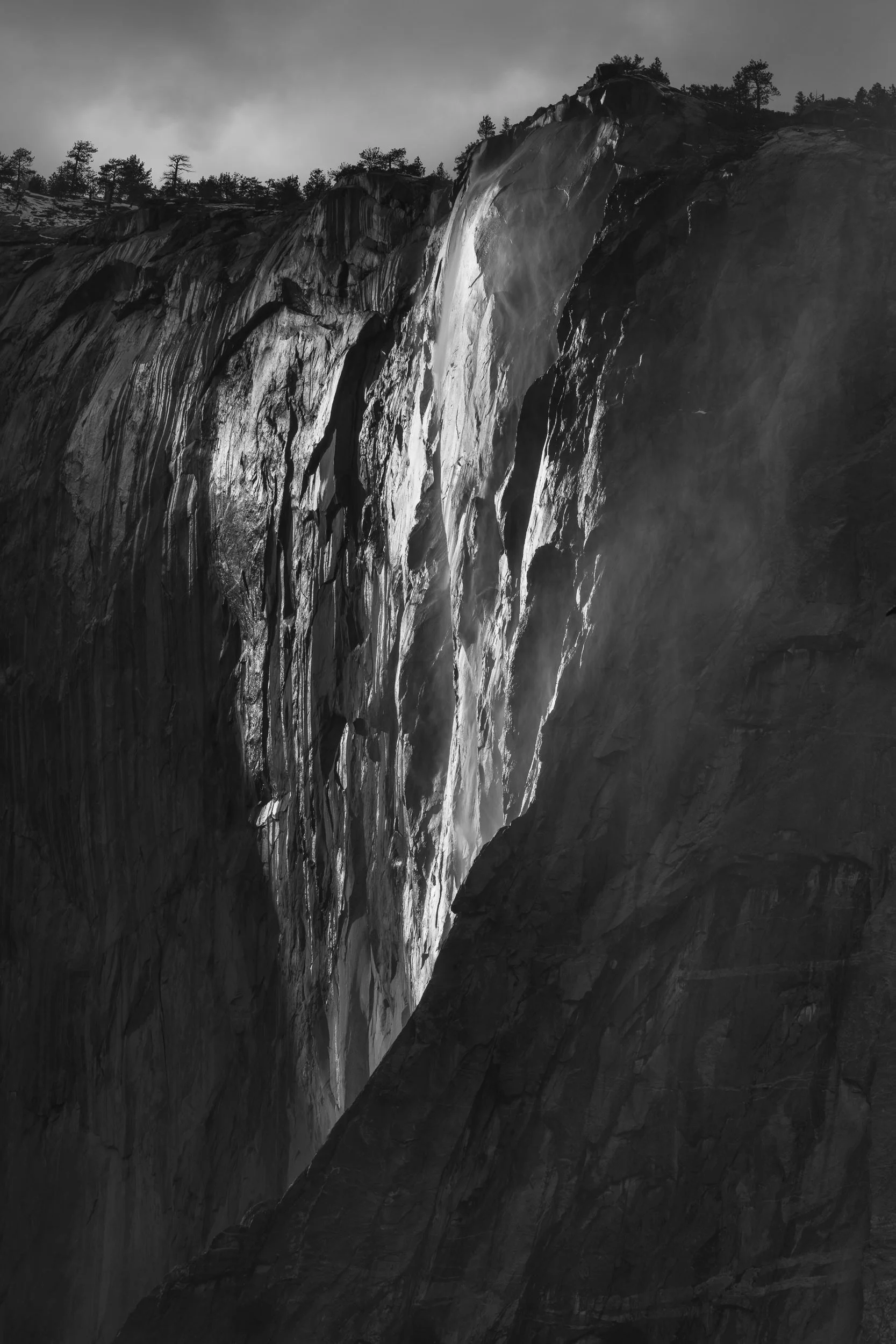
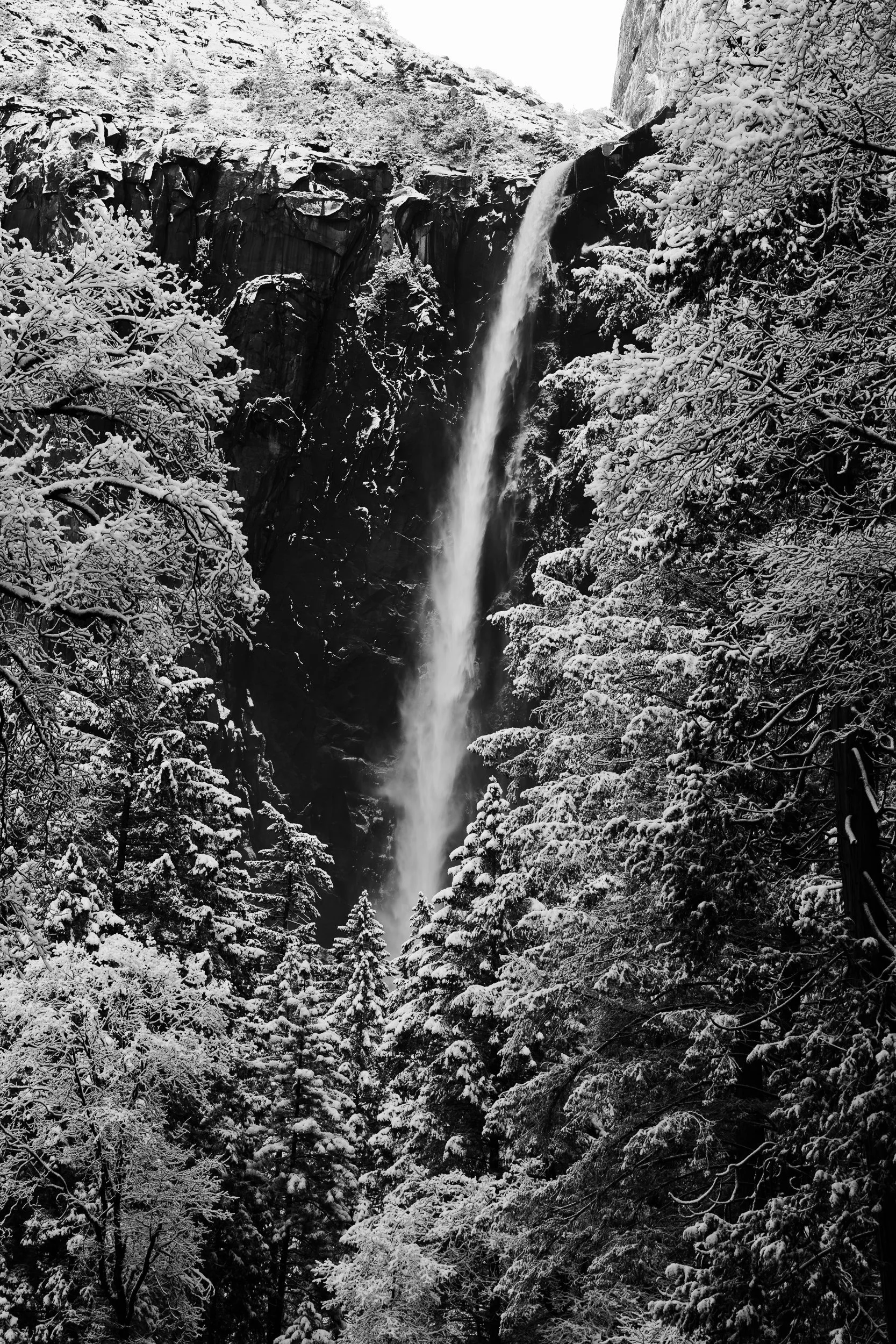
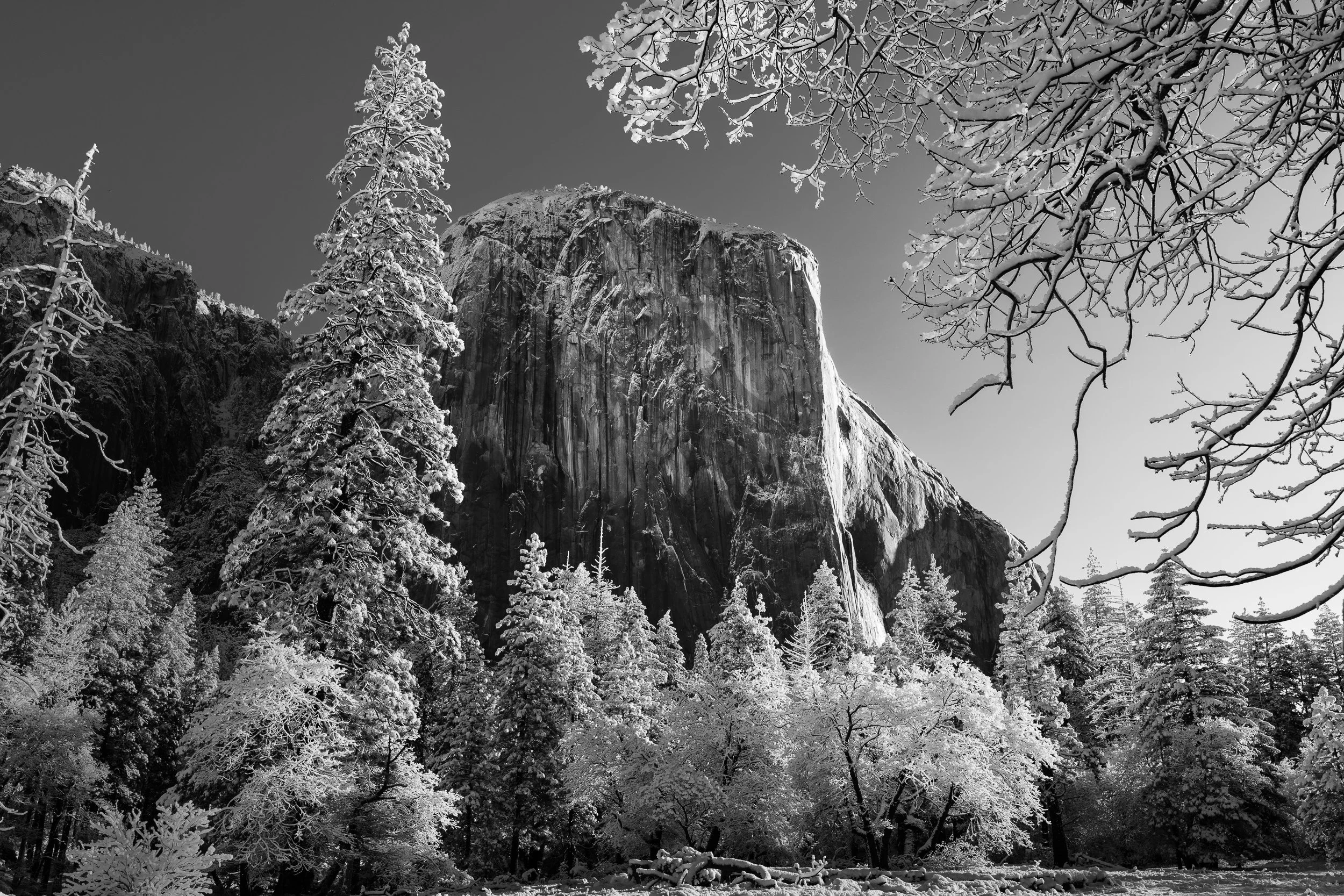
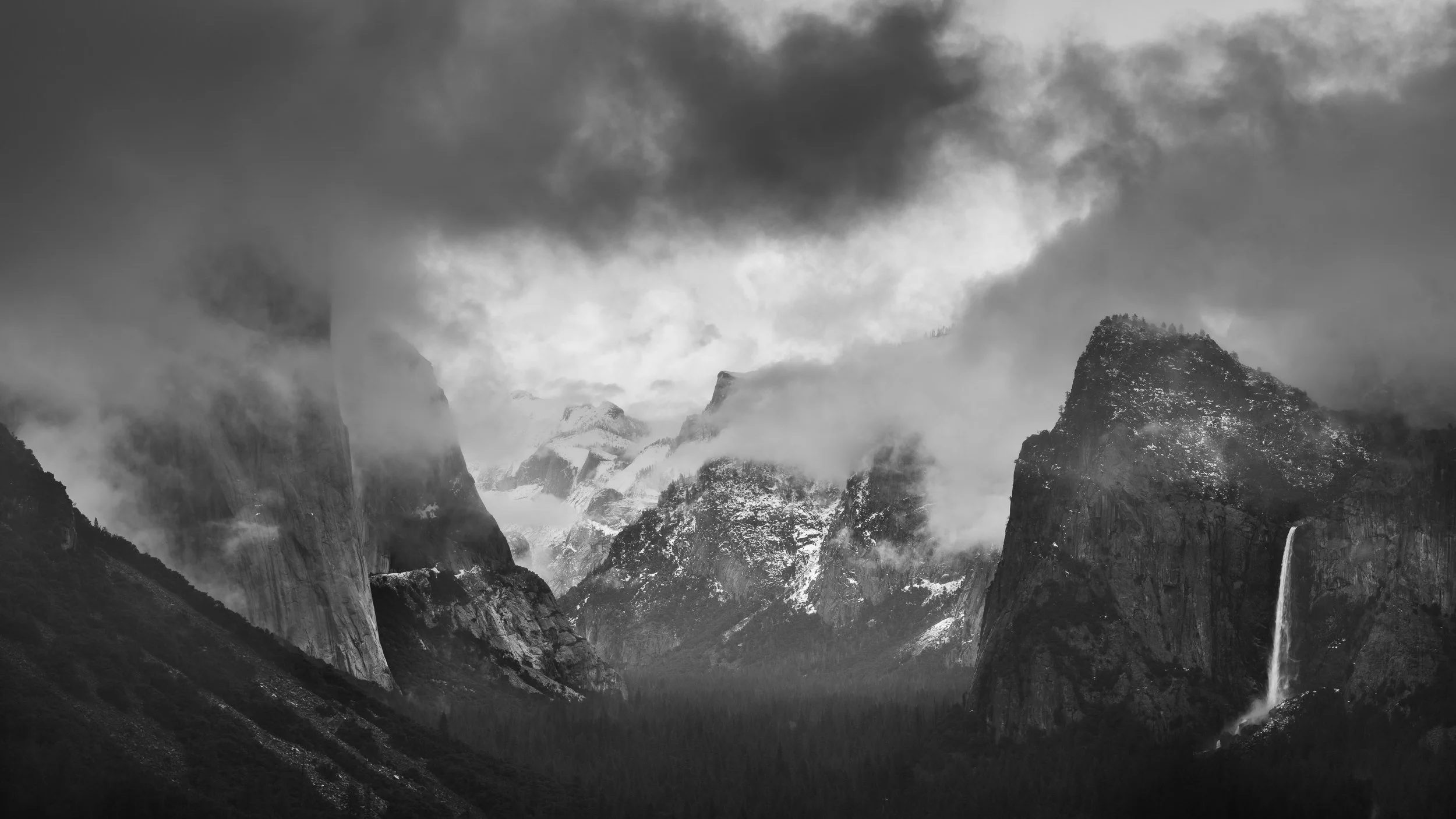
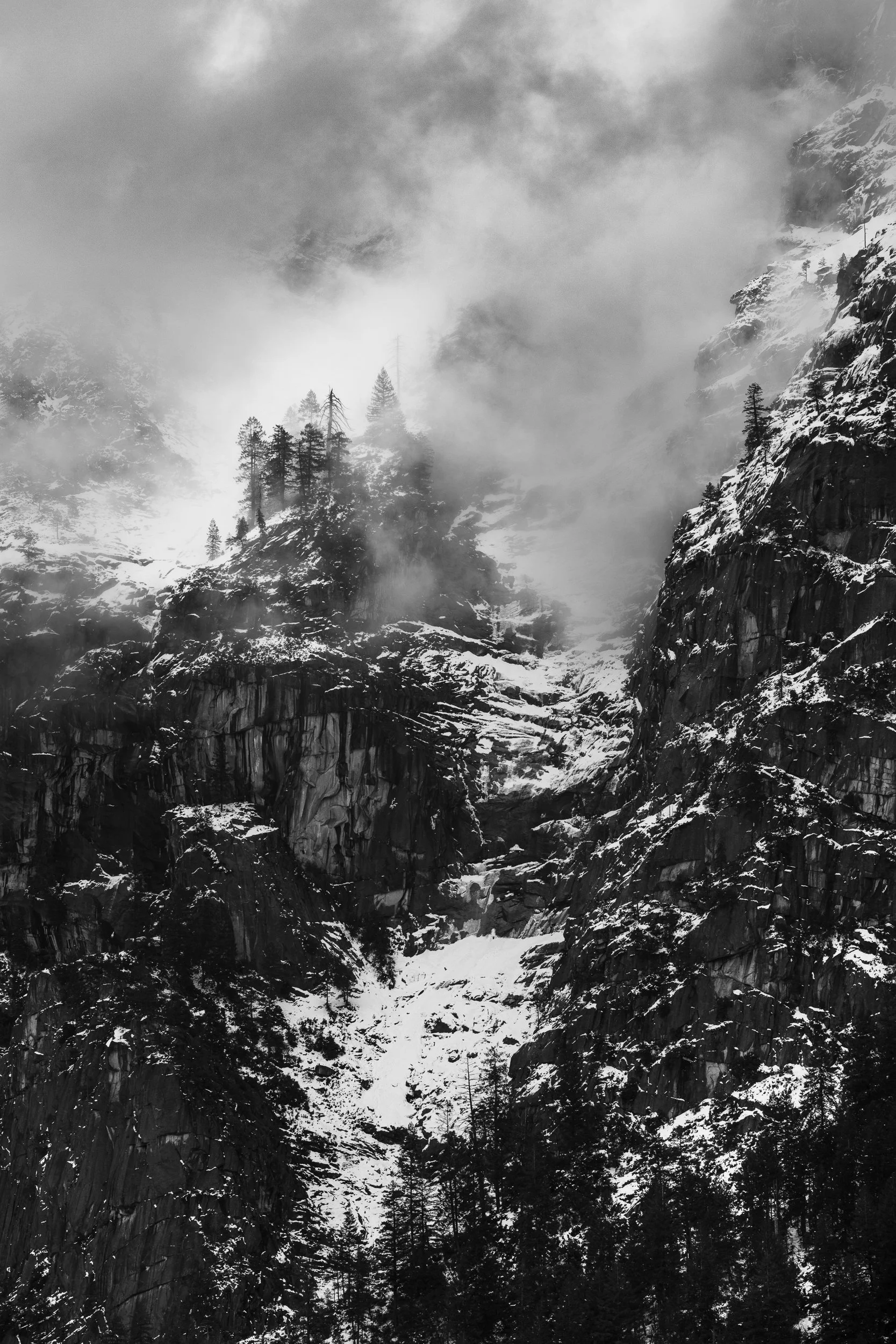
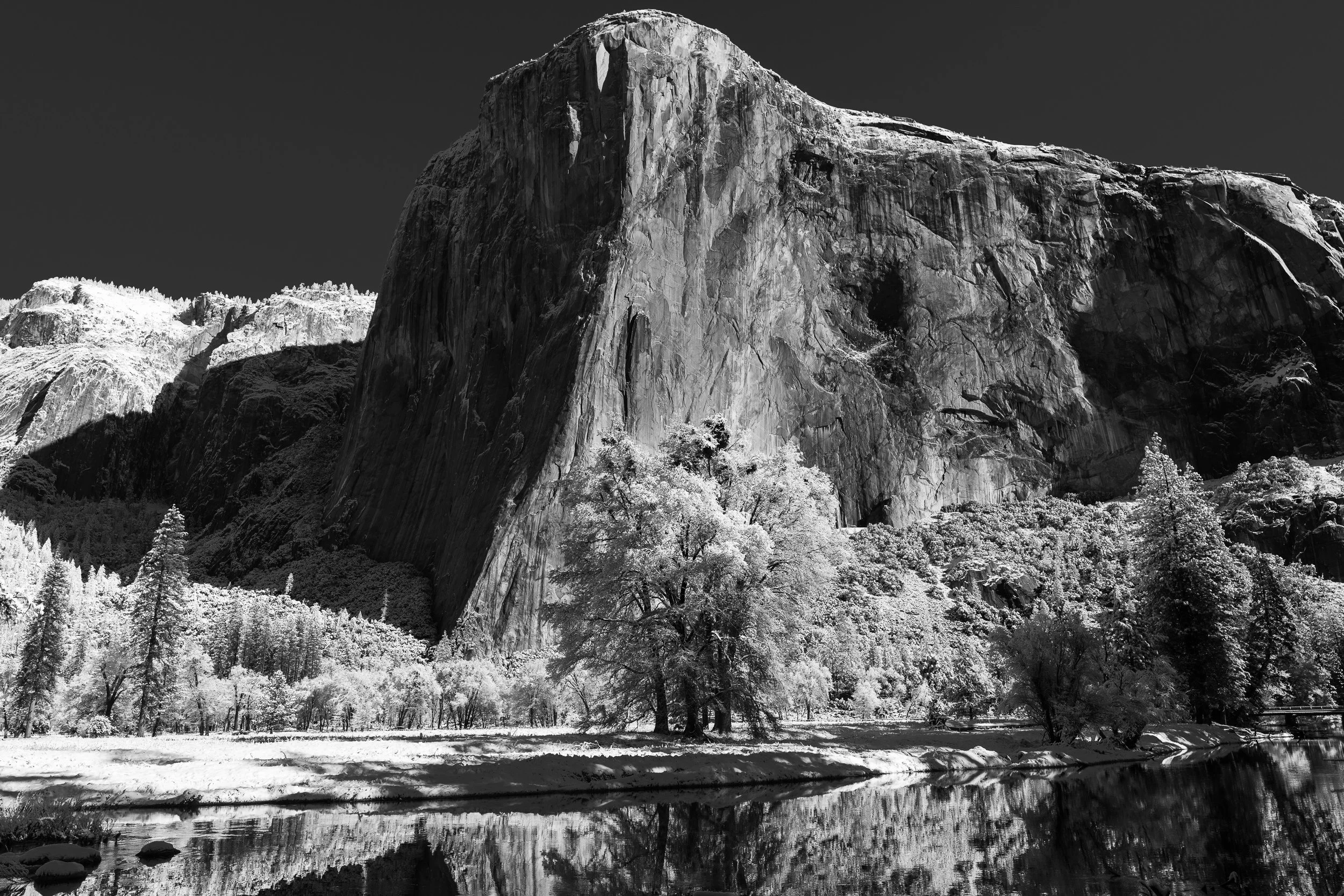
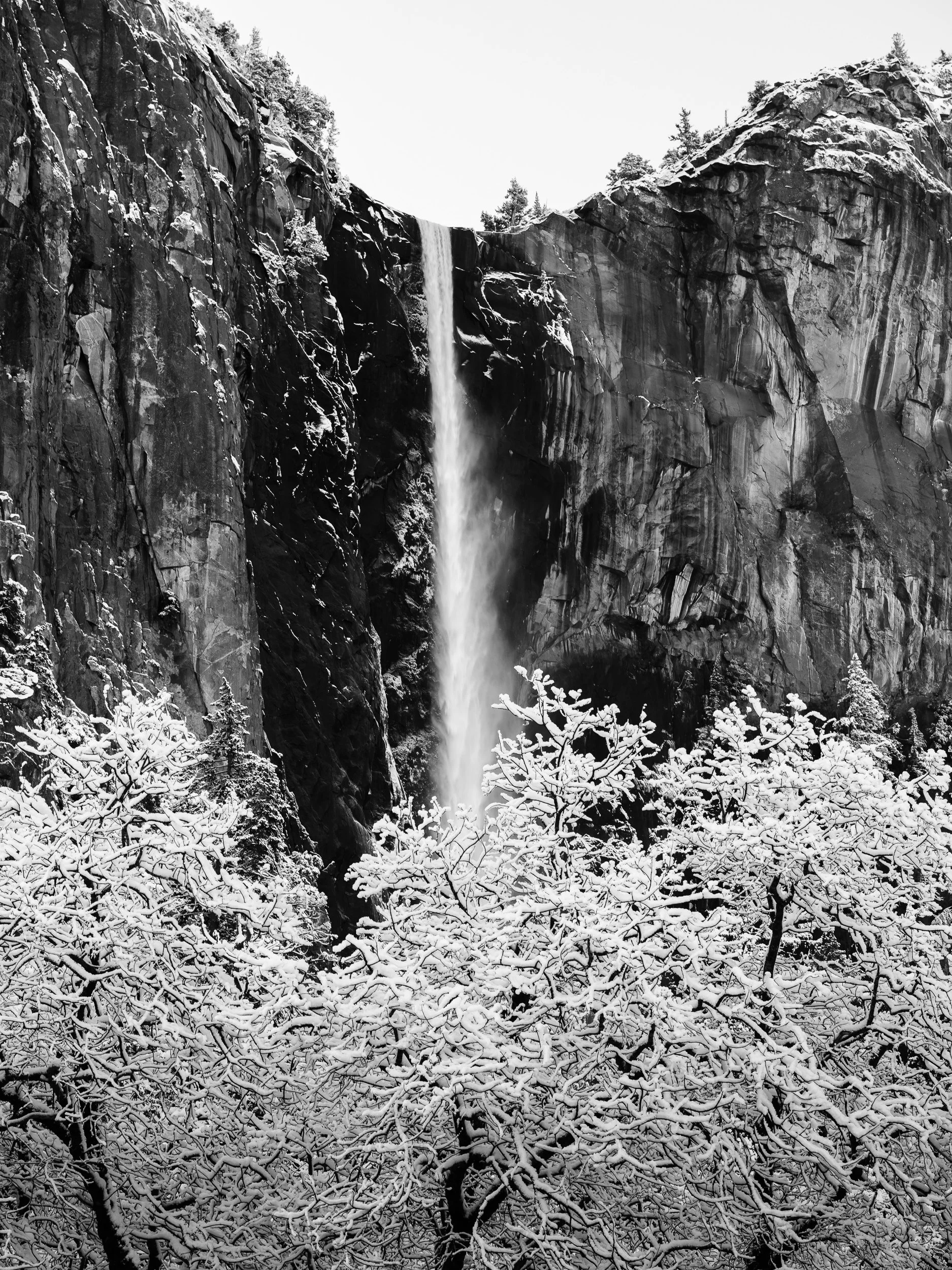
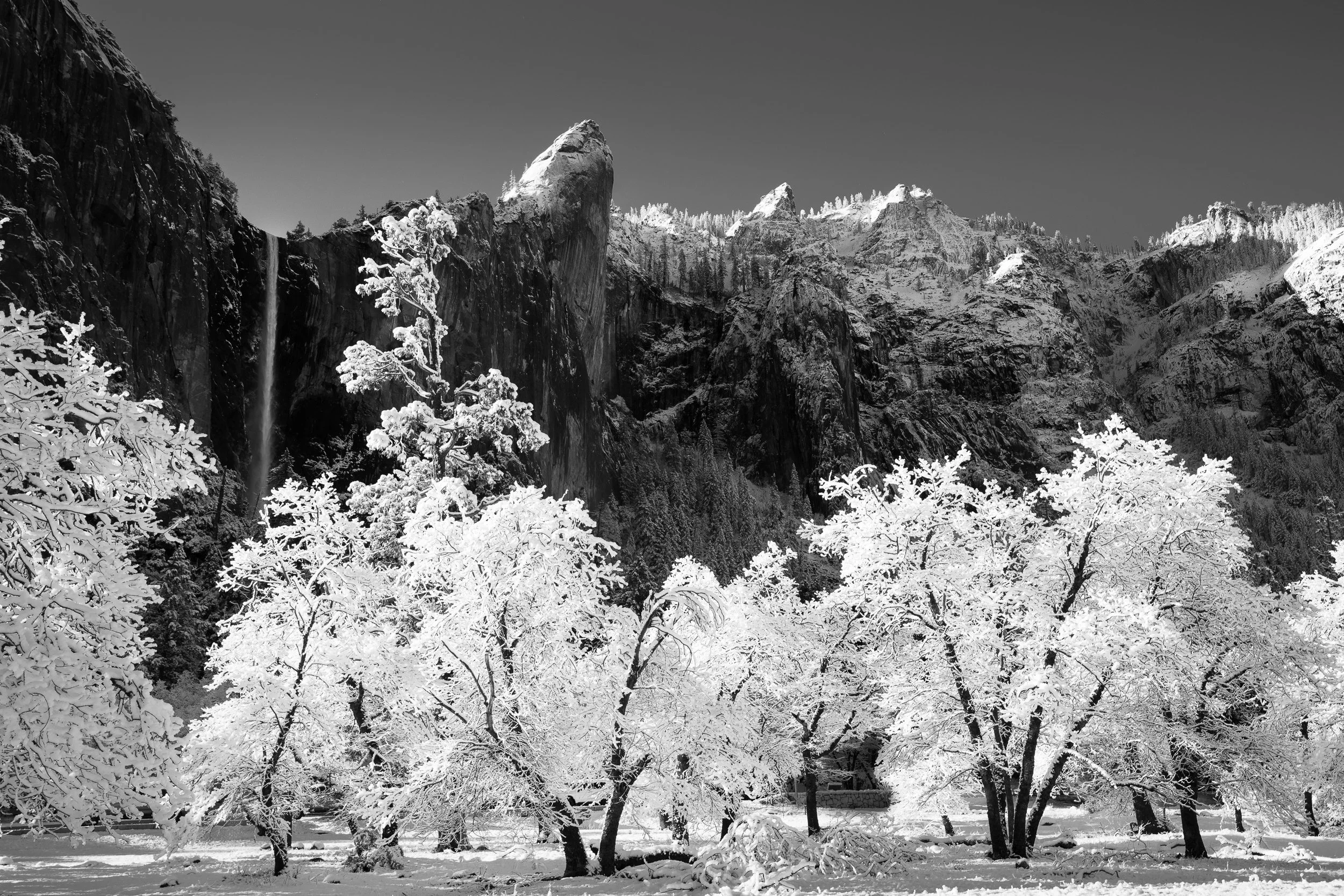
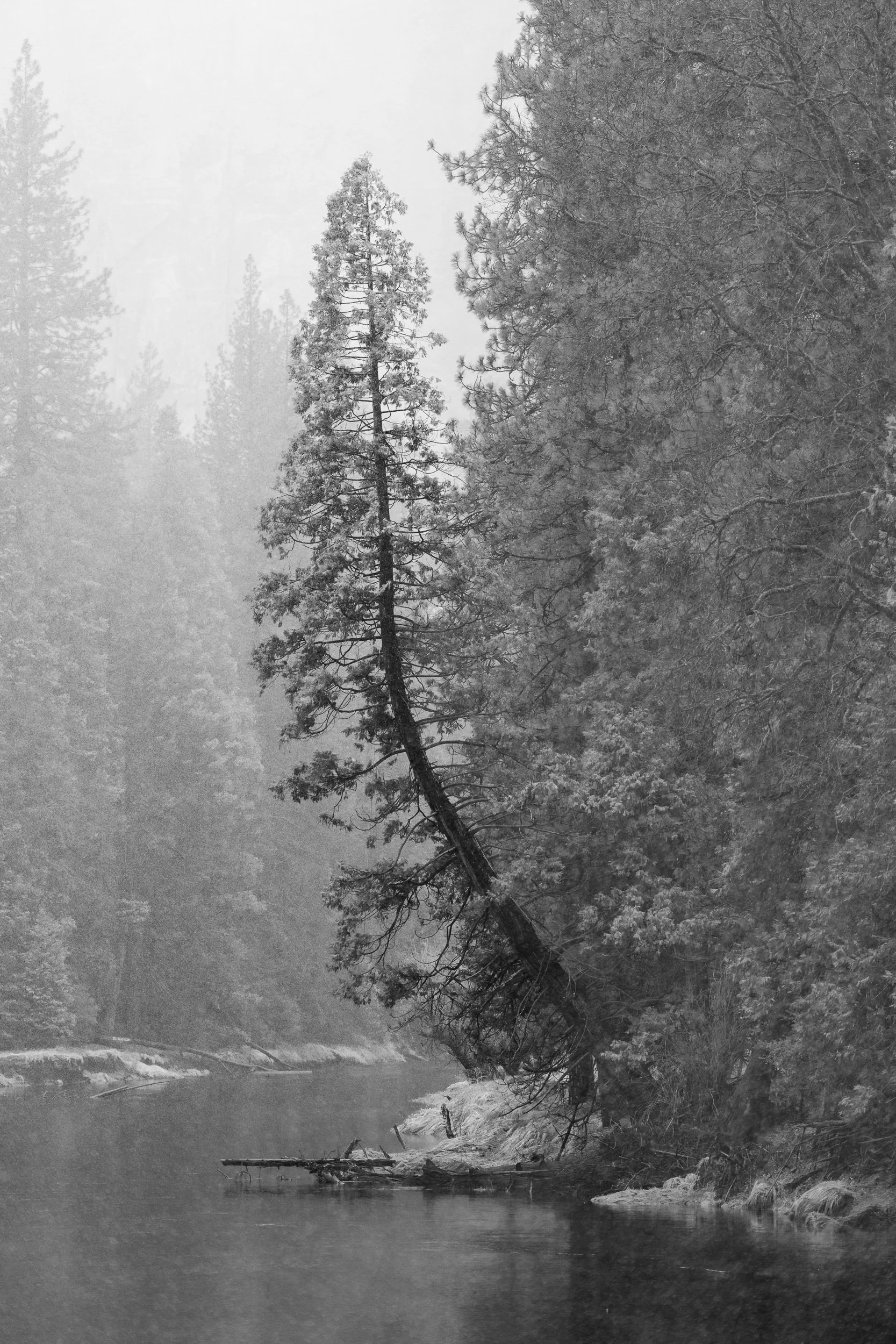
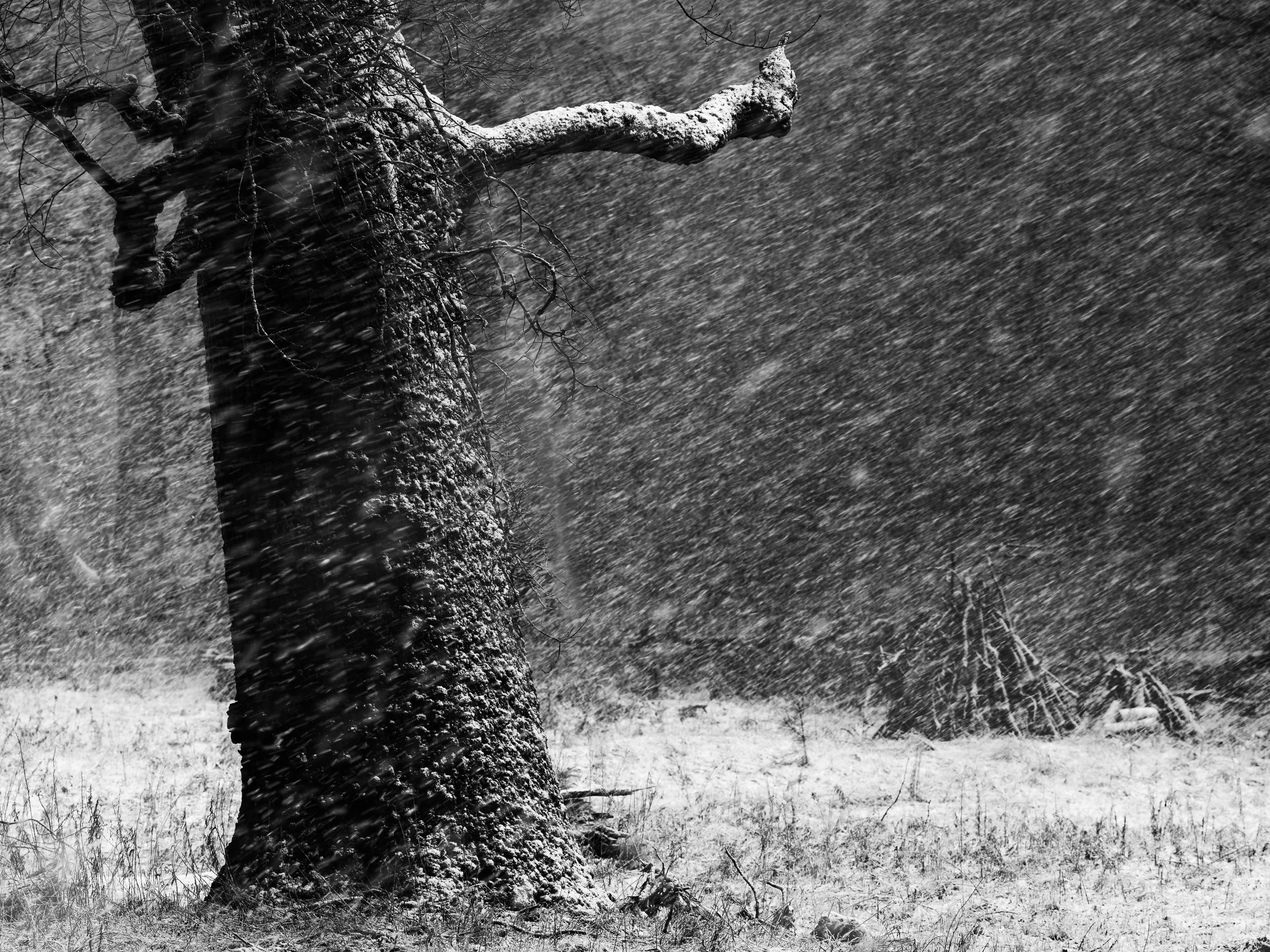
The series Inspired by Ansel Adams was photographed in early spring, in early April. During my time in Yosemite, a snowstorm moved through the valley, bringing changing weather conditions from one day to the next. Light appeared and disappeared. Visibility shifted. The landscape felt quieter and more restrained.
Instead of fighting these conditions, I worked with them.
Waiting became part of the process. The snow, clouds, and changing light revealed a side of Yosemite that felt raw, calm, and honest.
I did not chase dramatic moments.
I focused on structure, space, and balance.
Why black and white was essential
The decision to work in black and white was not about style or nostalgia.
It was about focus.
Without color, attention shifts to form, contrast, and depth. Granite becomes texture. Light becomes shape. The landscape speaks through structure rather than surface.
This approach naturally connects with Ansel Adams’ philosophy, but the result is my own. The influence is in the way of thinking, not in imitation.
What Ansel Adams taught me through this work
Ansel Adams did not teach me how to photograph Yosemite.
He taught me how to approach a landscape with seriousness and care.
To slow down.
To think beyond the moment.
To consider how an image will live as a print, not just how it looks on a screen.
These ideas shaped every decision behind Inspired by Ansel Adams.
A fine art series created to last
Inspired by Ansel Adams was created as a fine art collection, not as travel photography.
Each photograph is released as a limited edition fine art print, signed and numbered, and accompanied by a certificate of authenticity.
The goal is simple:
to create work that lives quietly and confidently in a space, and continues to reveal itself over time.
Yosemite has been photographed countless times.
My intention was not to add noise, but to offer something honest.
→ Explore the Inspired by Ansel Adams Collection
Final Note
Ansel Adams showed that landscape photography can be built with care, patience, and responsibility. Not rushed. Not accidental. His work reminds us that the land deserves time and attention, and that the final photograph should be worthy of the place it represents.
Inspired by Ansel Adams is my way of carrying that mindset forward. Not by repeating the past, but by standing in the landscape with respect and working slowly enough to understand it. The goal was never to recreate what already exists, but to respond honestly, through my own way of seeing.
Yosemite has been photographed countless times.
What matters is not adding another image, but adding a considered one.


Frequently Asked Questions about Ansel Adams and Yosemite Photography
Why is Ansel Adams so closely associated with Yosemite Valley?
Ansel Adams photographed Yosemite Valley for most of his life. He returned many times, in different seasons and conditions, building a deep understanding of the landscape. His work from Yosemite helped define how fine art landscape photography is seen today and played a major role in connecting photography with conservation.
What made Ansel Adams’ photography different from others?
Ansel Adams treated photography as a complete process, not a quick reaction. He thought about the final print before taking the photograph, controlled light and contrast carefully, and refined each image in the darkroom. His focus on intention, craft, and printing helped establish photography as a serious art form.
Did Ansel Adams photograph only in black and white?
While Ansel Adams did experiment with color later in his career, he is best known for his black and white landscape photography. He believed black and white allowed greater control over light, contrast, and form, helping the viewer focus on the structure and emotion of the landscape.
Why is Yosemite Valley important for landscape photographers today?
Yosemite Valley remains one of the most influential landscapes in photography history. Its scale, granite formations, and changing light continue to challenge photographers to work with patience and intention. For many artists, Yosemite represents both a technical and artistic benchmark.
Is Inspired by Ansel Adams a tribute or a reproduction of his work?
Inspired by Ansel Adams is not about recreating or copying his photographs. The influence comes from his approach—slowing down, respecting the landscape, and thinking about the final print. The images are created with a personal visual language while honoring the discipline Adams stood for.
Are the photographs in this Yosemite series limited edition?
Yes. Each photograph in the Inspired by Ansel Adams collection is released as a limited edition fine art print. All prints are signed, numbered, and accompanied by a certificate of authenticity.